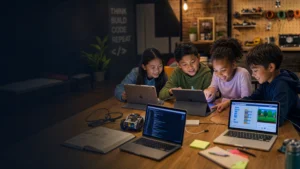
She sat with her hands in her lap for the first twenty minutes. Not frozen. Watching. The other kids were already moving through the platform, and she was cataloging the room. The robot on the shelf. The screens. What the kid two seats over was doing with the arrow keys.
By session four, she had built her first loop. She did not celebrate. She looked at the screen for a moment. Then she looked at me. “It worked,” she said. That was it.
But something had shifted. Something small and real.
What growth looks like at six is different from what it looks like at ten, and different again from what it looks like at thirteen. The tools are the same. The character development the program is building is the same. But the shape of the change is specific to where a child is when they arrive, and what they are ready to take on.
K-2: The First Big Thing Is Just Trying
At five and six, the challenge is not technical. It is the willingness to be a beginner in front of other people. Most K-2 students arrive already convinced that getting something wrong is a problem. They have learned this. School has taught them. Peers have taught them.
The growth that happens in a K-2 session is, at first, almost entirely about that one thing. Not the code. The willingness to press the button and see what happens. The willingness to press it again when what happens is not what they intended.
A child who arrives at session one with her hands in her lap and by session four is building loops without asking for permission has cleared the most important obstacle she will face in any future learning environment. She has learned that trying and not immediately succeeding is something she can survive. That is the whole thing, at this age. Everything else is built on it.
Platforms like Kodable give K-2 students genuinely meaningful cause-and-effect challenges. But what the session actually does is give the child a safe space in which trying is the norm, asking for help is easy, and failing is just information. The persistence that forms at this stage is not dramatic. It looks like a six-year-old pressing a button for the third time.
Grades 3-5: When Confidence Starts to Have Evidence
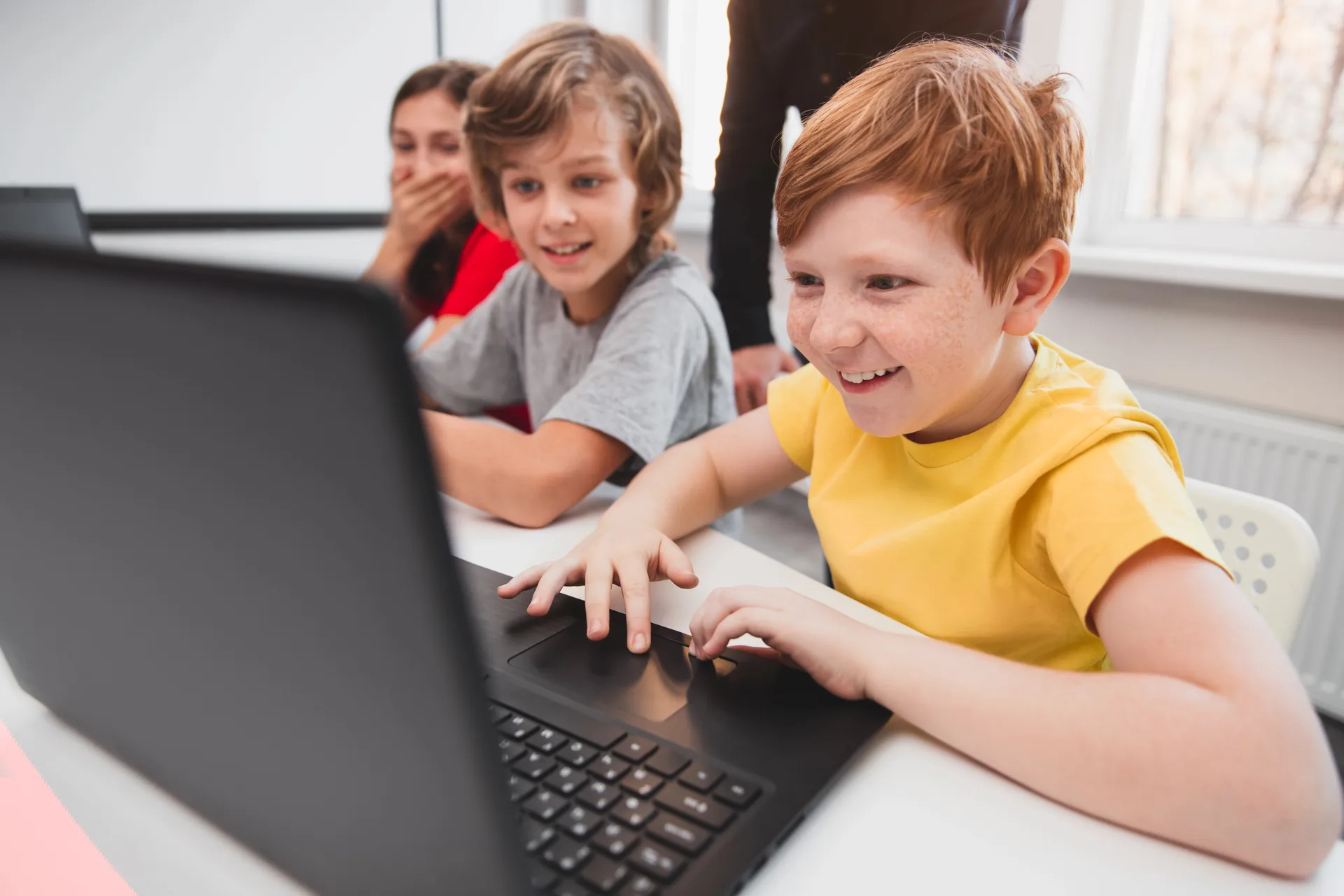
Something different happens around eight or nine. The child who spent two years pressing buttons and building small things begins to realize they have a track record. They have solved things. They have built things other people can use. The confidence forming at this stage is not borrowed from anyone. It is earned.
A student in this range who has been enrolled for a year can usually describe what they worked on without being asked. Not summarize a lesson. Describe a specific project, a specific problem they hit, what they tried first, what they changed. That narration is the marker of a child who has internalized the problem-solving frame.
The social dimension also opens up in this range. In K-2, most students are working primarily in their own world even when they are in the same room. By grade four, students begin to genuinely engage with what their peers are doing. Teamwork at this age becomes real rather than parallel play. Collaborative builds start producing friction, which is where the real social development happens: two students who want different solutions to the same problem, and a session structure that requires them to work it out.
Grades 6-8: The Shift to Self-Directed Problem-Solving
By middle school, a student who has been in a character-based technology program for several years looks different in a specific way. They approach a problem they have not seen before differently than a student encountering the same problem for the first time. They do not panic. They make a plan. They try something. They notice the result. They adjust.
That is not a natural developmental milestone. It is a practiced behavior, built through dozens of sessions in an environment that structured exactly that response. A middle school student who has spent three years at after-school coding has rehearsed the problem-solving sequence so many times it has become their default orientation toward difficulty.
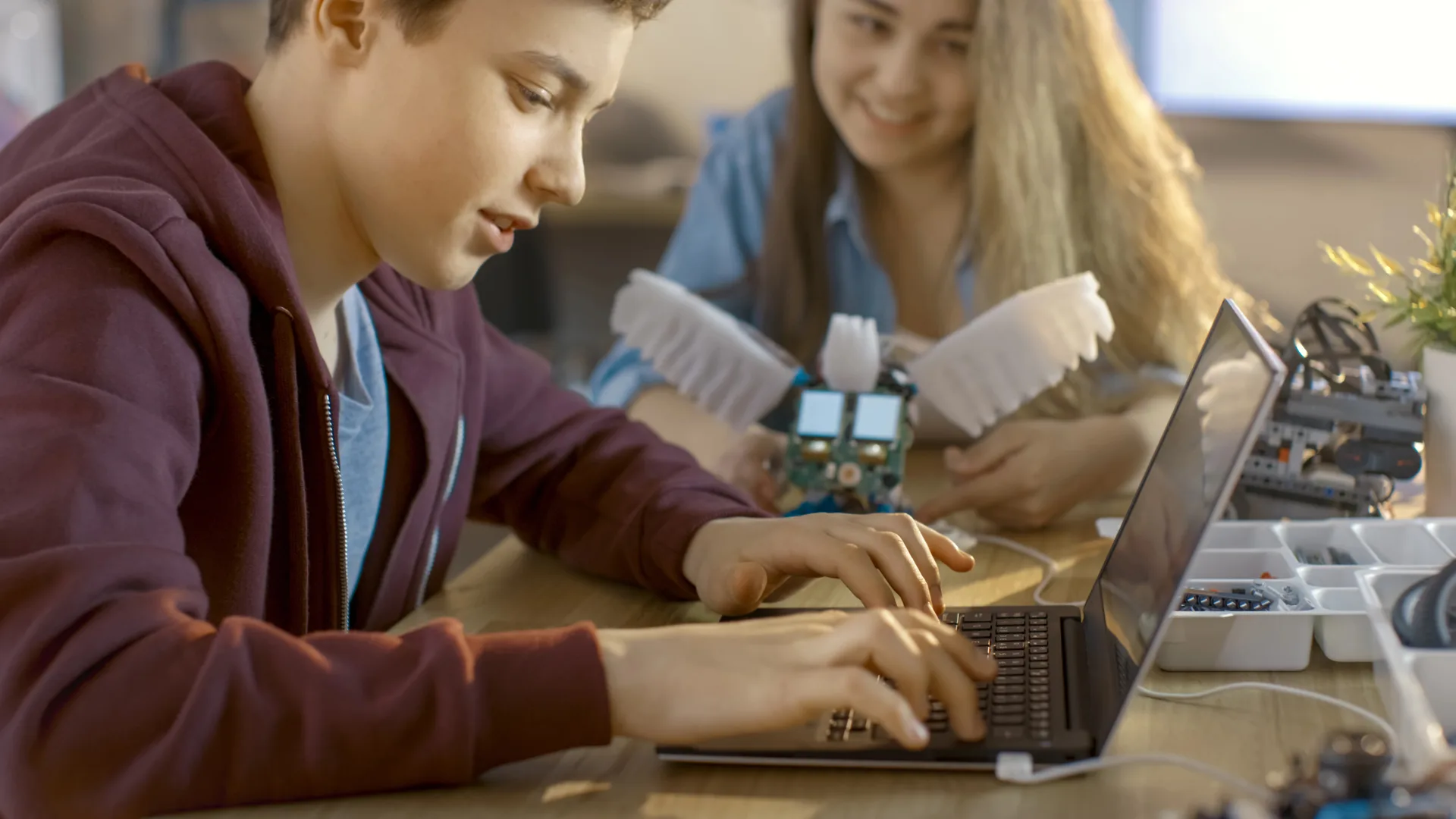
The leadership development also becomes visible at this stage. A student who was the beginner at seven is now, at twelve or thirteen, the student the younger kids watch. They carry a kind of authority that did not come from being told they were good at coding. It came from years of accumulating evidence that hard things are workable.
Mentorship at this stage is not formal. It is the twelve-year-old who pauses when the eight-year-old next to them is stuck and says “what have you tried?” That question, the same question their coach has asked them hundreds of times, is now theirs. They own it.
What the Same Student Looks Like Two Years In
The parents who describe the growth most clearly are almost always the ones who have been enrolled longest. They can point to a specific moment, usually about a year in, when they realized their child was different in a way that had nothing to do with coding.
It was not “my child can build a robot now.” It was “my child stayed with a hard homework problem for fifteen minutes before asking for help, and that had never happened before.” Or: “my child told me what went wrong at practice and asked what they should try differently.” Or: “my child volunteered to show the younger kids something at the community event, without anyone asking.”
Those are the growth signals. They do not arrive with certificates. They arrive quietly, and then parents realize they have been watching them for a while without naming what they were seeing.
What the Growth Signals Look Like From a Parent’s Distance
Most parents watch their child at the program through a car window and a brief summary in the drive home. That is a narrow view. The growth happening inside the session does not always surface in those five minutes.
What does surface, over time, is something quieter. The way the child describes a hard moment. Not what they built, but what went wrong and what they tried. A child who comes home and says “I kept getting the same error but I figured out it was the variable name” is narrating something important. They are reporting a process, not just a result.
That shift in how a child describes their work is one of the most reliable early indicators that the growth is real. Before the belt advances. Before the showcase projects. The narration changes, because the relationship to difficulty has changed. The child has started to see the problem-solving sequence as something they do, not something that happens to them.
Parents who know to listen for this report noticing it around months two to four. It does not happen all at once. But it builds, and once it starts, it tends to stay.
For Liberty Families Watching Their Child Grow
Families from Liberty who have children enrolled at Love to Code Academy at 248 NE Barry Road often describe the same experience: the growth they see in their child does not match what they expected when they enrolled. They expected their child to learn coding. What they got was a child who handles difficulty differently.
What it looks like is different at six than at thirteen. But in both cases, the parent who stays long enough to see it uses the same word when asked what changed.
Brave.