
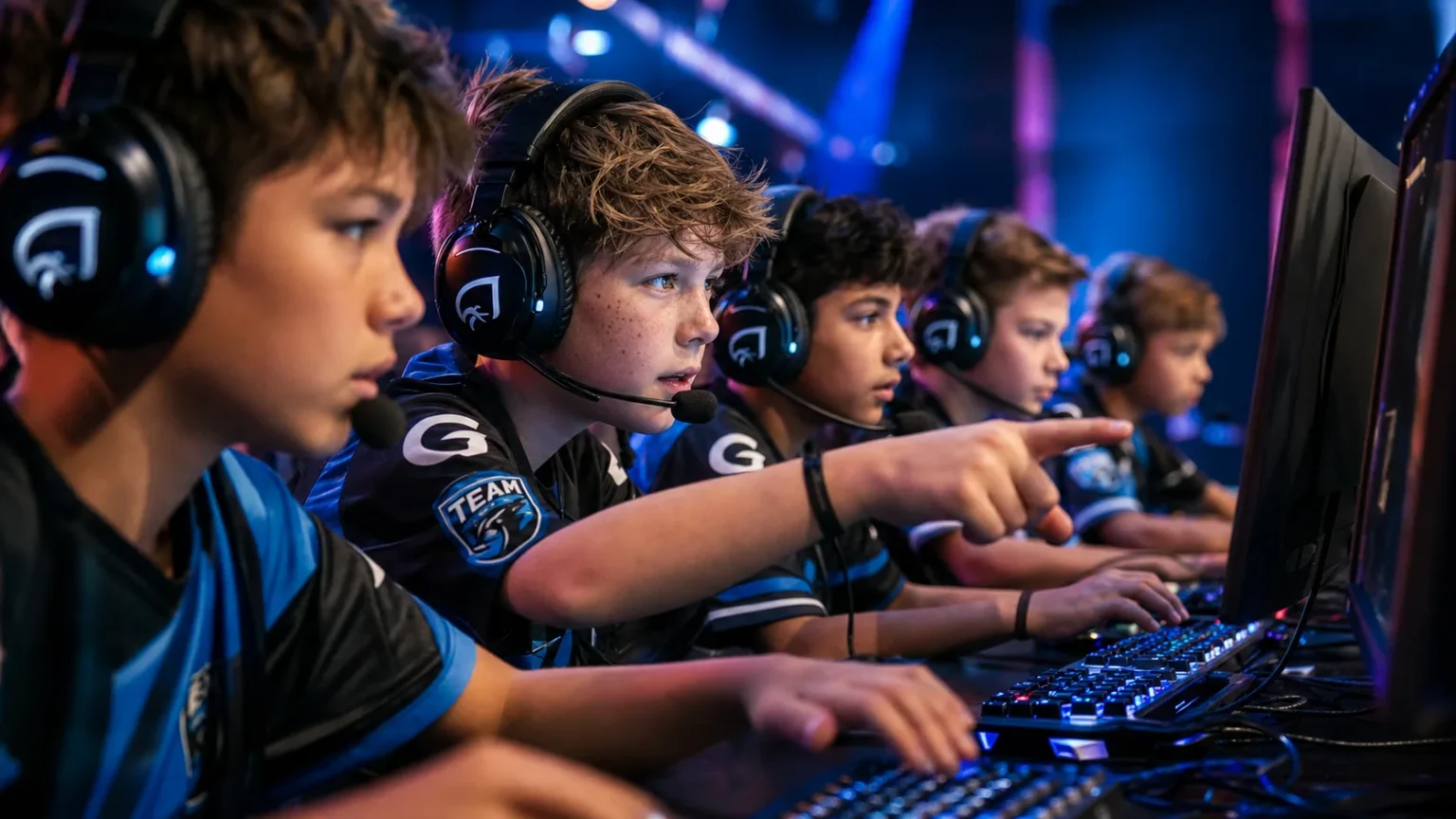
If your first instinct is that esports is just gaming with a more serious name, you are not wrong to be skeptical. A lot of what gets called an esports program is a kid on a screen with headphones on, getting frustrated when they lose and carrying that frustration out of the room. The question is not whether your child plays. The question is whether the program around them has a structure that turns that play into growth.
In a structured esports environment with a real coaching framework, competitive gaming becomes one of the most useful training grounds available for developing communication under pressure, strategic thinking, and sportsmanship. Here is what that looks like, and three warning signs that tell you a program is not doing any of it.
What Esports Develops When the Coaching Is Real
Esports is not a solo activity. It requires students to communicate strategy in real time, under competitive pressure, often when things are going sideways. That is one of the most demanding communication situations a young person will face regularly, and most of them have never been coached through it.
At Love to Code Academy, the program year includes a sprint dedicated entirely to sportsmanship because that is when group dynamics and competitive pressure are most visible. The principle behind it is direct: sportsmanship is most coachable when things go wrong. A loss in a competitive match, handled well, is worth more than a hundred practice sessions on cooperation.
Communication Under Pressure
When a team is behind with thirty seconds left, how students communicate tells a coach more about their development than any practice drill. A student who can stay composed, give clear direction, and adjust their own role under that pressure is practicing something that transfers far outside the game.
This is coached in real time, at the exact moment it is hardest to do well. A coach names what they see when it happens: “That’s teamwork. You adjusted your role when the team needed it.” The trait is named in the moment, not summarized at the end of class. That is how the behavior becomes a habit instead of an accident.
Strategic Thinking That Requires Other People
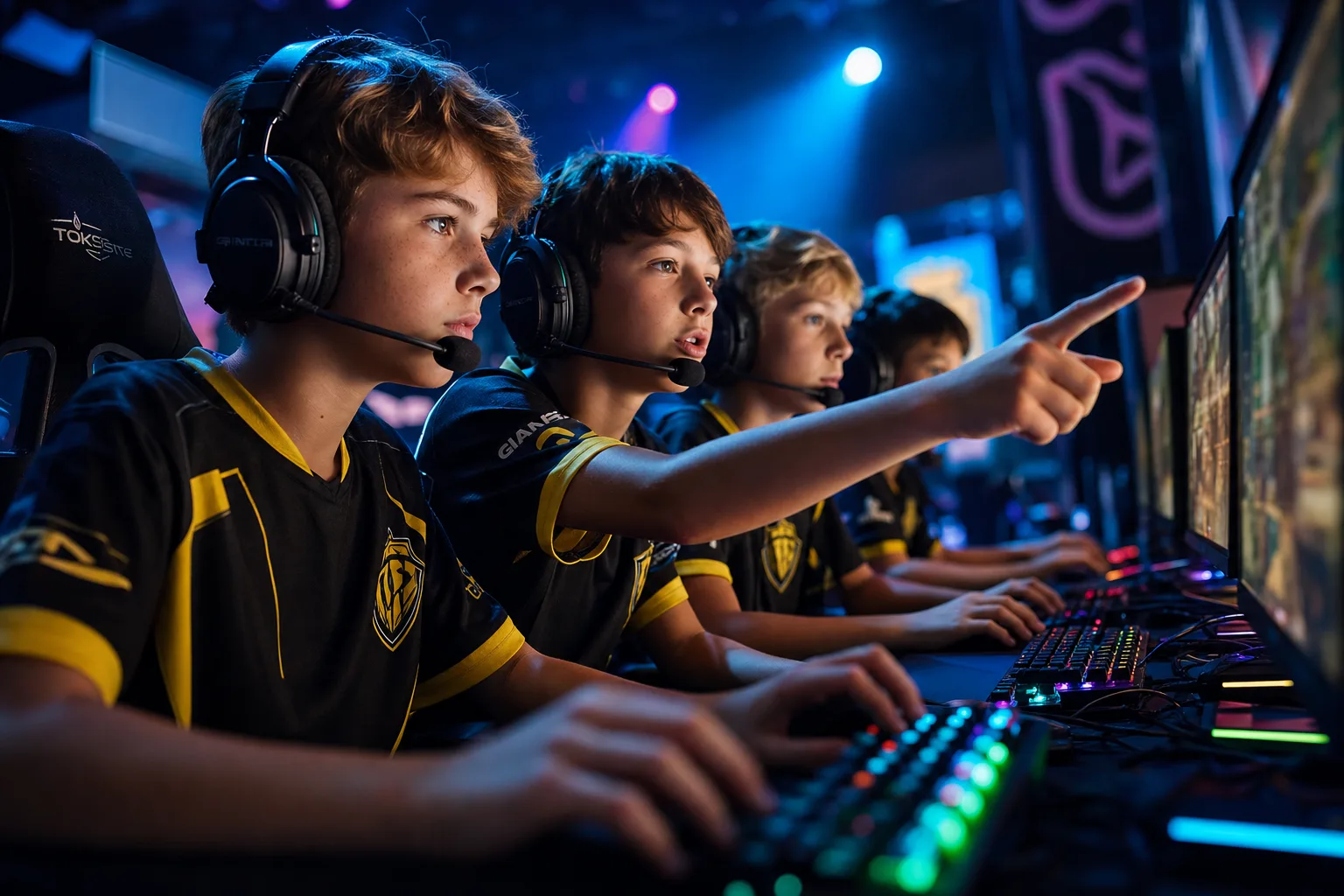
Esports is a team environment. There is no individual path to success when the game requires shared decisions under time pressure. Every student has a role, and the team succeeds or fails based on how clearly those roles are understood, communicated, and adapted together.
The growth here is not game strategy. It is the capacity to work with others when the stakes feel real and the time is short. That is the Teamwork trait working at full demand: contributing with respect, sharing roles, staying accountable when the pressure is highest. The game is the training ground. The character development is what parents take home.
Handling Wins and Losses
Sportsmanship at Love to Code Academy is not a rule about shaking hands. It is a coached trait: showing respect, being fair, and handling wins and losses with maturity. In an esports setting, the test arrives in every session. Wins feel good. Losses feel personal. A program that does not coach what happens in those moments has left the most important work undone.
The difference between a coached esports environment and an uncoached one shows up in the smallest exchanges. After a hard loss, a coach names what just happened: “That’s self-control. You stayed composed when it was hard to.” In an uncoached environment, the same moment passes without language, and the frustration becomes the pattern instead of the self-control.
What to Watch Out For
This is the section most esports programs skip. Three warning signs that tell you a program is not doing the developmental work, regardless of what the program description says.
The first is the absence of explicit sportsmanship expectations. If a program does not name how students are expected to behave when they lose, they will behave however they feel. That is not coaching. That is a room with screens and supervision.
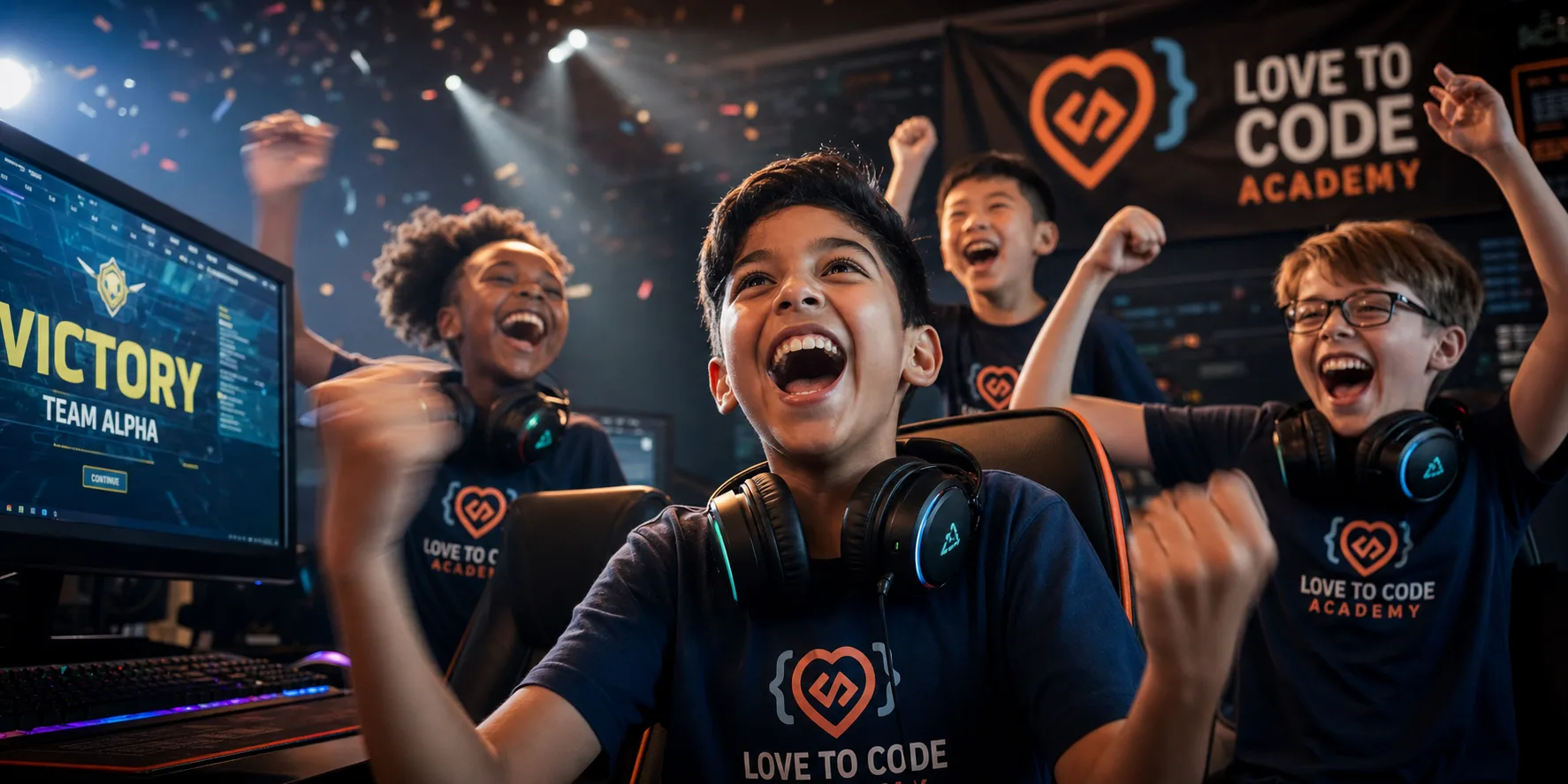
The second is a staff that supervises instead of coaches. Supervision means someone is watching. Coaching means someone is observing a behavior, naming the trait it connects to, and reinforcing it in the moment. These are not the same thing. A parent watching a session for twenty minutes can tell the difference: does the adult in the room speak in behavior and trait language, or only in rules and game mechanics?
The third is no structured reflection at the end of each session. The challenge phase is where character is practiced. The reflection phase is where it gets named. A student who leaves a session without any structured moment to articulate what happened carries the experience without the language, and without the language, the growth does not transfer to the next session or the next challenge.
Technology is the training ground. Character development is the outcome. For families who want to see this framework in practice, the esports program at Love to Code Academy is built around these same principles in every session.
The question is not whether your child plays competitive games. The question is whether the program around them has a system to turn that play into something that lasts.
Ready to see this in action?
At Love to Code Academy, every session is designed to build
the traits that matter most. Students enter as curious
beginners and grow into confident creators, resilient problem
solvers, and emerging leaders.