
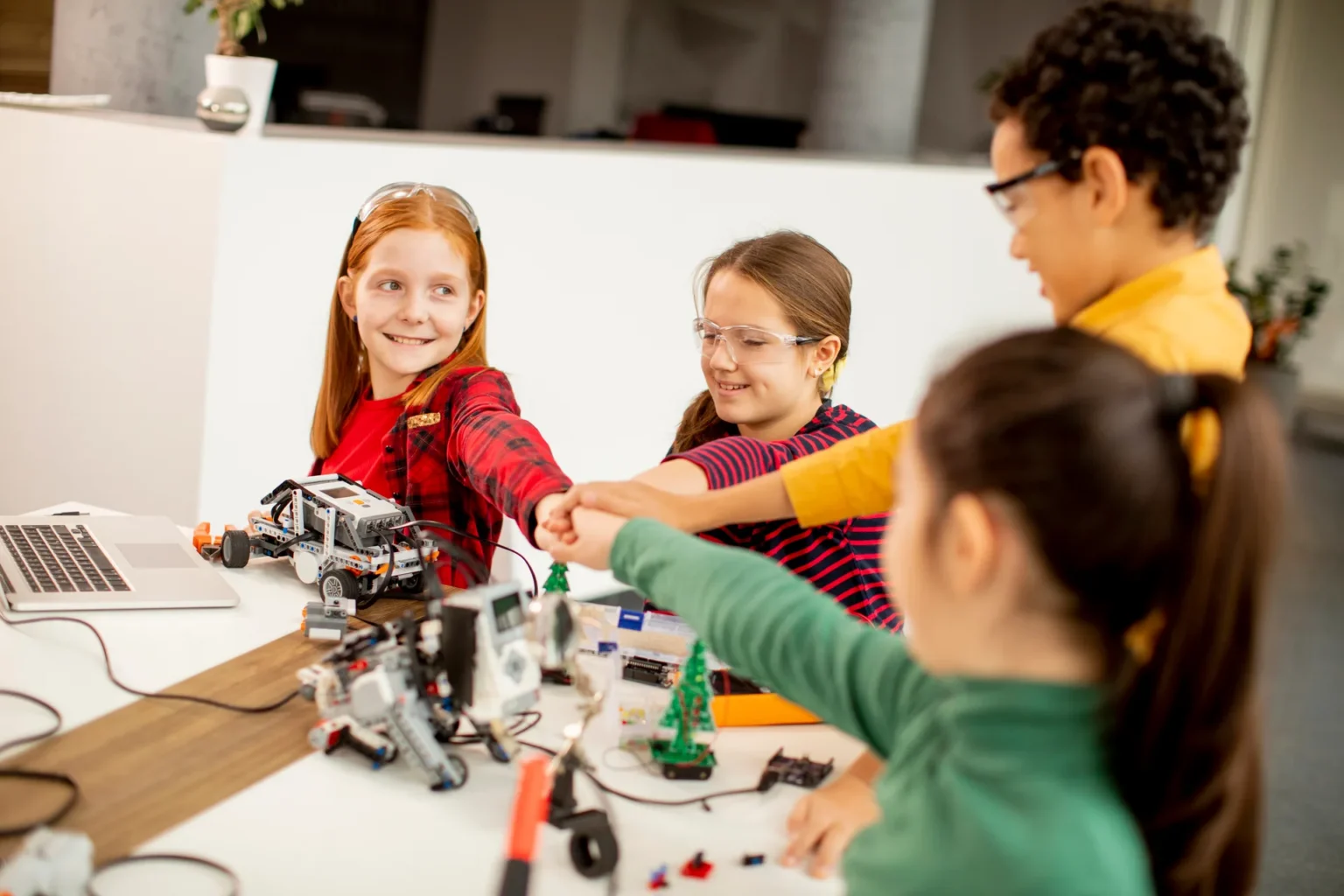
The students who develop the most self-possession, the ability to stay clear-headed under genuine pressure, are disproportionately from programs with a competitive component. Not all competitive programs, and not competition alone. But competition, structured well, builds something that a relaxed learning environment does not and cannot.
Parents considering a competitive track for their child in coding or robotics often have a version of the same question: is competition appropriate at this age, and will it help or hurt? The answer is consistent: it depends entirely on whether the competition is structured around character development or structured around winning.
What Competition Adds That a Standard Program Does Not
A standard coding program for kids produces growth through challenge. A competitive program produces growth through challenge under stakes. Those two environments are meaningfully different, and the difference is not just intensity. It is the kind of regulation it demands.
A student who has to perform in front of judges, whose team’s result depends on their individual contribution, who experiences loss publicly and has to process it in real time: that student is being asked to develop emotional and cognitive capacity that a no-stakes environment simply does not require. Sportsmanship is practiced under that pressure. So is genuine teamwork, the kind where there is no safe option of doing your part in isolation and hoping the pieces fit together at the end.
The Process Behind a Competitive Robotics Team (Jordan)
Before a student can compete, three things need to be true. They need a working system: a robot or a program that does what it is supposed to do under conditions they do not fully control. They need a team that has tested that system under as many failure conditions as they can anticipate. And they need a shared understanding of what each person does when something unexpected happens during the competition itself.
That preparation process is, in many ways, more valuable than the competition. A team that builds a robot for competition will prototype, test, rebuild, document what broke and why, rebuild again, and test under simulated competition conditions before the event. That iteration loop, prototype, test, rebuild, is the engineering mindset in its most rigorous form. A student who goes through that process three times in a season has developed a relationship with systematic problem-solving that a standard curriculum rarely produces.
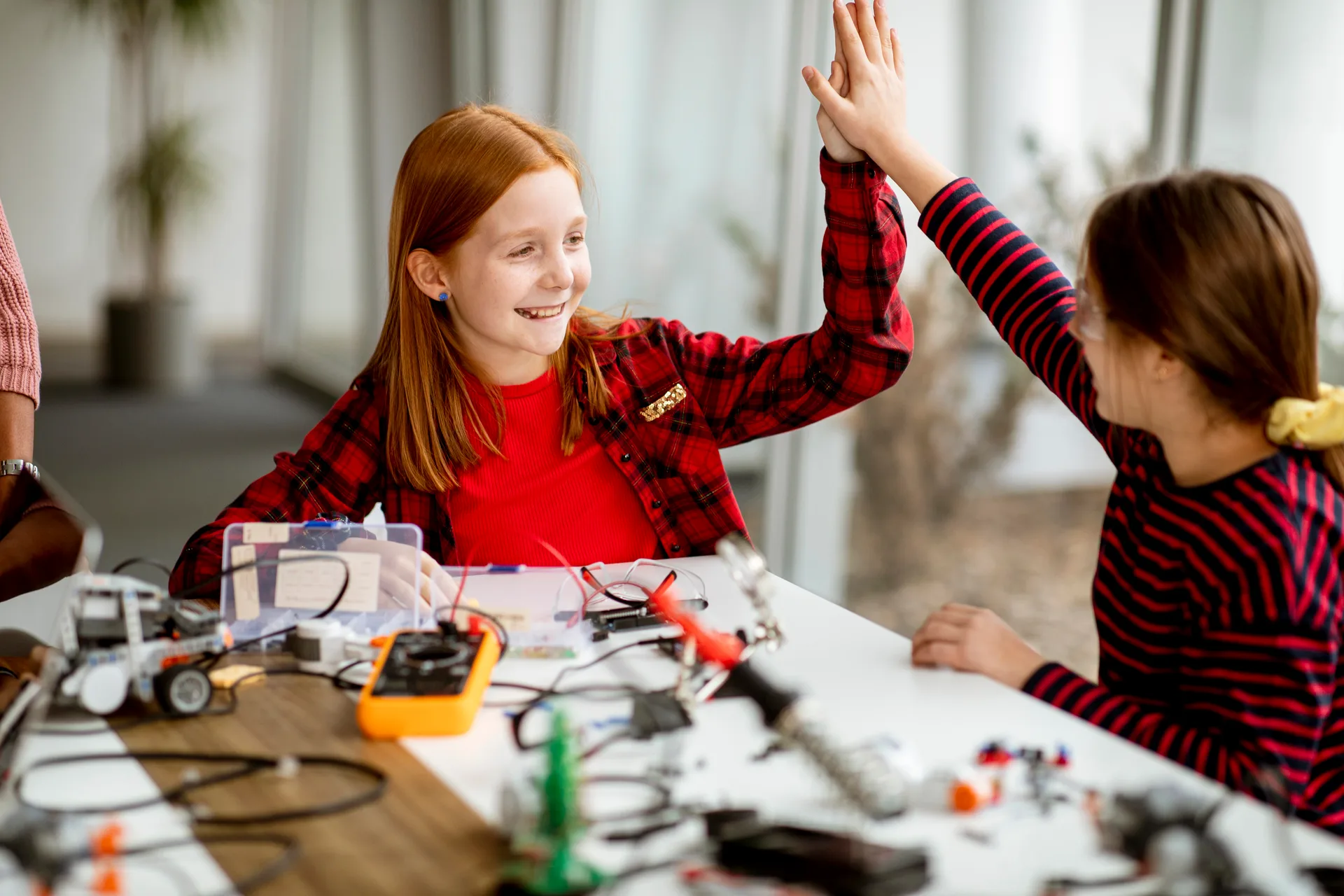
What competition also forces is real accountability within the team. When the robot performs in front of judges, there is no ambiguity about whether the work was done. The team either built something that works under those conditions, or they did not. That accountability is not punitive. It is clarifying. It tells the team exactly what they need to work on, and it creates the kind of honest post-competition debrief that builds both technical skill and character over time.
What Good Competitive Structure Looks Like
The programs where competition develops character rather than eroding it share specific structural features. Coaches debrief results with as much focus on how the team handled difficulty as on the technical outcome. Winning is celebrated honestly, without inflation. Losing is processed as information, not verdict. Students are encouraged to observe other teams’ approaches with curiosity rather than judgment.
In a well-structured competitive environment, a student who loses well: who stays composed, who debriefs honestly, who identifies what the team will change for next time, is developing more than a student who wins while internally blaming teammates. The coach’s job is to make sure the character development is happening regardless of the scoreboard.
LTCA’s Competitive Environment
The esports program and robotics competition tracks at LTCA are built around the same character framework that runs through every program at the academy. Competitive sessions include structured debriefs. Coaches are trained to watch for the character signals: who handled losing with composure, who communicated clearly under pressure, who took responsibility for their contribution to an outcome, and to develop those qualities explicitly alongside the technical ones.
A student who competes through LTCA is not competing to build a resume. They are competing because competition, structured well, accelerates the development of exactly the qualities the program is designed to produce: the capacity to stay in difficulty, work genuinely with other people, and handle outcomes they did not fully control with honesty and composure.
What Parents Observe in Students Who Have Competed
The outcomes that show up in students who have gone through a full competitive season are different in character from the outcomes of a standard after-school enrollment, though they build on the same foundation.
The most consistent observation parents report is composure under pressure. A student who has competed, who has experienced the specific pressure of performing in front of judges with teammates depending on them, who has won and lost and debriefed both, develops a quality that is difficult to describe precisely but unmistakable when you observe it. They become less reactive in high-stakes situations. A difficult test at school, a conflict with a peer, a moment where their performance is being observed: these situations do not produce the same escalation they once did.

Parents also describe a change in how their child processes outcomes they did not control. A child who has learned to debrief a competitive loss with specificity and without blame develops a relationship with uncontrolled outcomes that is fundamentally different from the one most children carry. They are more likely to ask “what would I do differently” than “why did this happen to me.” That orientation, toward agency rather than attribution, is one of the most durable outcomes a competitive program can produce.
The Transition From Standard to Competitive Track
Not every student is ready for a competitive track at enrollment. The standard after-school program builds the foundation that makes the competitive experience valuable. A student who has not yet developed basic persistence and self-regulation inside a coding or robotics environment will find competition overwhelming rather than developmental. The emotional demands of competition require the emotional skills the standard program builds.
The transition typically happens naturally. Students who have advanced through several belt levels, who are comfortable with failure as information rather than verdict, and who have demonstrated genuine teamwork in collaborative sessions are students who are ready to take the competitive experience on. Coaches at LTCA help families identify when a student has reached that point, rather than leaving the decision to the parent’s guess.
For families whose child is already showing the signs of readiness, the competitive track at LTCA adds a dimension to the program that the standard track cannot replicate. The stakes are real, the pressure is genuine, and the growth on the other side of it is the kind that parents and students both remember.
For Kansas City Families Interested in Competitive Programs
Families across the Kansas City northland who are looking for a structured competitive coding or robotics experience for their child will find it at Love to Code Academy at 248 NE Barry Road. The competitive tracks at LTCA are not separate from the character development program. They are its most demanding expression.
If your child is ready for that level of challenge, the growth on the other side of it is worth the difficulty of getting there.
Enroll your child or ask about competitive track availability →