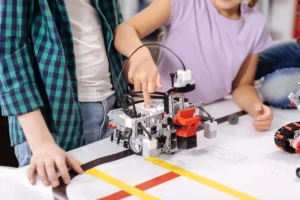
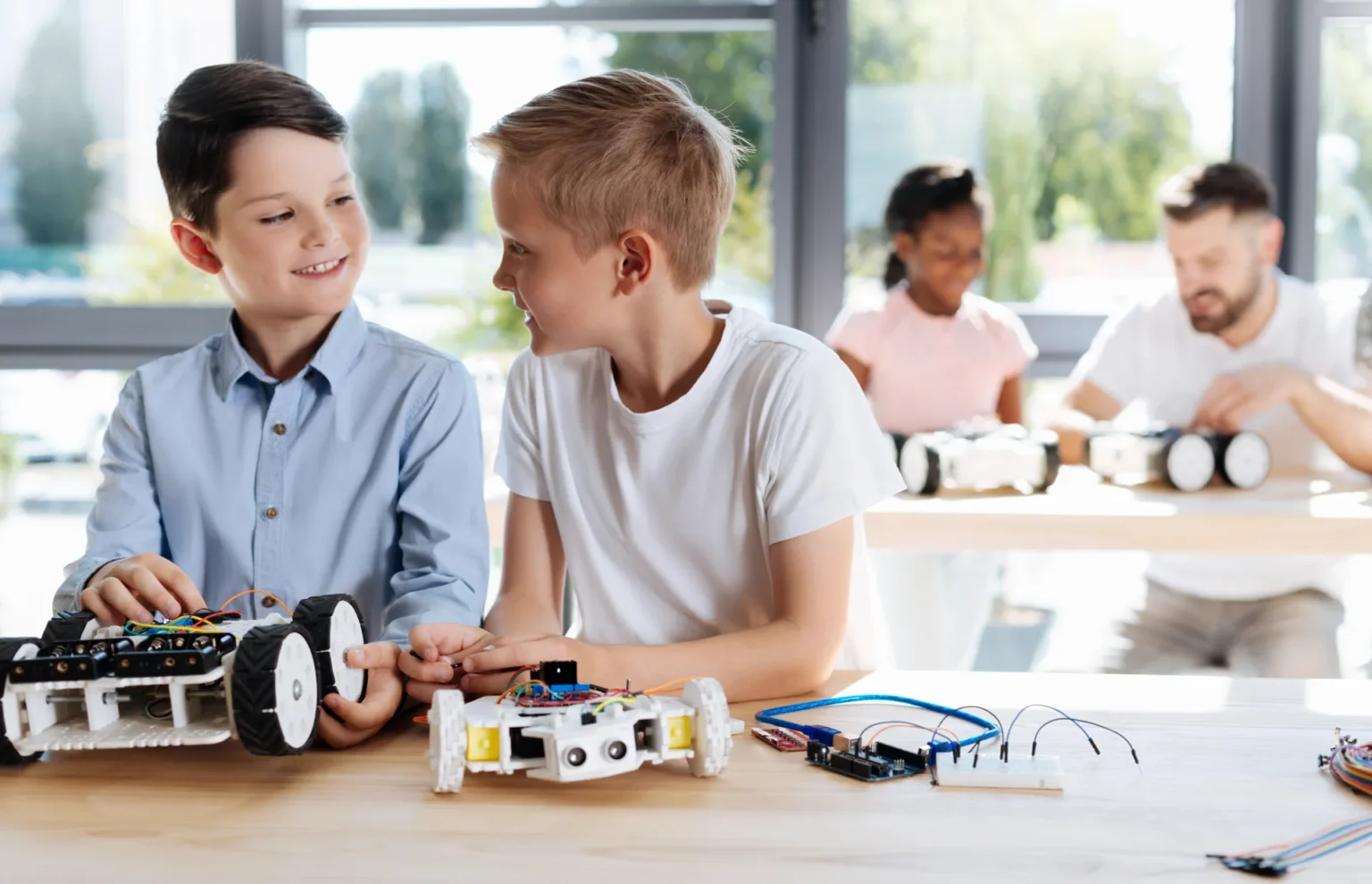
Two students were on the same project. One had built the sensor module. It was not working. The robot kept stopping when it should not have.
In the debrief, the student who had not built the sensor module started to suggest it might be a different issue. The student who had built it stopped them. “No,” she said. “It is the sensor. I wrote the condition backwards. I know what I did.”
She had not been asked to say that. Nobody was watching for it. She said it because it was true, and because in this room, saying what was true had become the natural response.
That is integrity: not as a value on a poster, but as a behavioral habit formed in an environment that made honesty the easier path than evasion.
Why Code Does Not Let You Blame Someone Else (Marcus)
Code is one of the most honest environments a child will ever work in. It does not accept excuses. It does not grade on effort. When a program runs, it produces exactly the result of what was written, not what was intended, not what would have been written with more time. Exactly what is there.
For a child who is accustomed to environments where intention counts, where a good-faith effort produces partial credit, this honesty is initially uncomfortable. The error message does not say “almost right.” It says “here is specifically what is wrong.” There is no ambiguity about who wrote the code or what it does.

Over months in this environment, students develop a specific relationship to their own work: they stop trying to distance themselves from it. The code is theirs. Its results are theirs. When it works, the satisfaction is real and earned. When it does not, the accountability is clear and immediate. Both build the same thing: the habit of owning what you produced.
What Integrity Looks Like in a Collaborative Build
In a shared project, the accountability stakes are higher because another person’s work depends on yours. A student who builds one component of a larger project and delivers something that does not work to spec has let their partner down. In a well-designed program, this is addressed directly, not softened.
The conversations that happen in LTCA after a collaborative project hits a failure point are one of the most important character development moments in the program. A coach who asks “whose part is this, and what does it need to do?” is not assigning blame. They are establishing ownership. The student who built it is the person who can fix it. That is not a punishment. It is the natural structure of collaborative work.
Students who have spent a year in this environment describe a shift in how they feel about their own contributions. They care more about the quality of what they hand off. Not because they were told to. Because they have experienced, enough times, what it feels like when someone else is depending on their work and the work is not right.
How This Transfers Into the Rest of a Child’s Life
The integrity habits built in a technology program are not specific to code. They are habits of ownership and honesty that transfer into any environment where accountability is required.
Parents describe specific home transfers. A child who used to give vague answers about what happened to a broken household item now gives a specific account. A child who used to deflect at school when a group project did not go well now describes their own contribution accurately, including what they got wrong. A child who used to avoid situations where they might be held responsible now engages with them differently, with something closer to matter-of-fact honesty.
The technology environment built that habit not through instruction about honesty but through an environment in which honesty was structurally easier and more useful than evasion. That is how durable character habits form: not by being taught, but by being practiced until they become default.
What the Difference Between Trying and Succeeding Teaches
One of the less-discussed aspects of integrity is the relationship between effort and outcome. A child who has grown up in environments where effort is rewarded regardless of outcome, where the participation ribbon and the first-place ribbon are treated as equivalent, develops a specific confusion: they may begin to believe that trying is the same as succeeding, or that the quality of their effort should determine how their result is received.
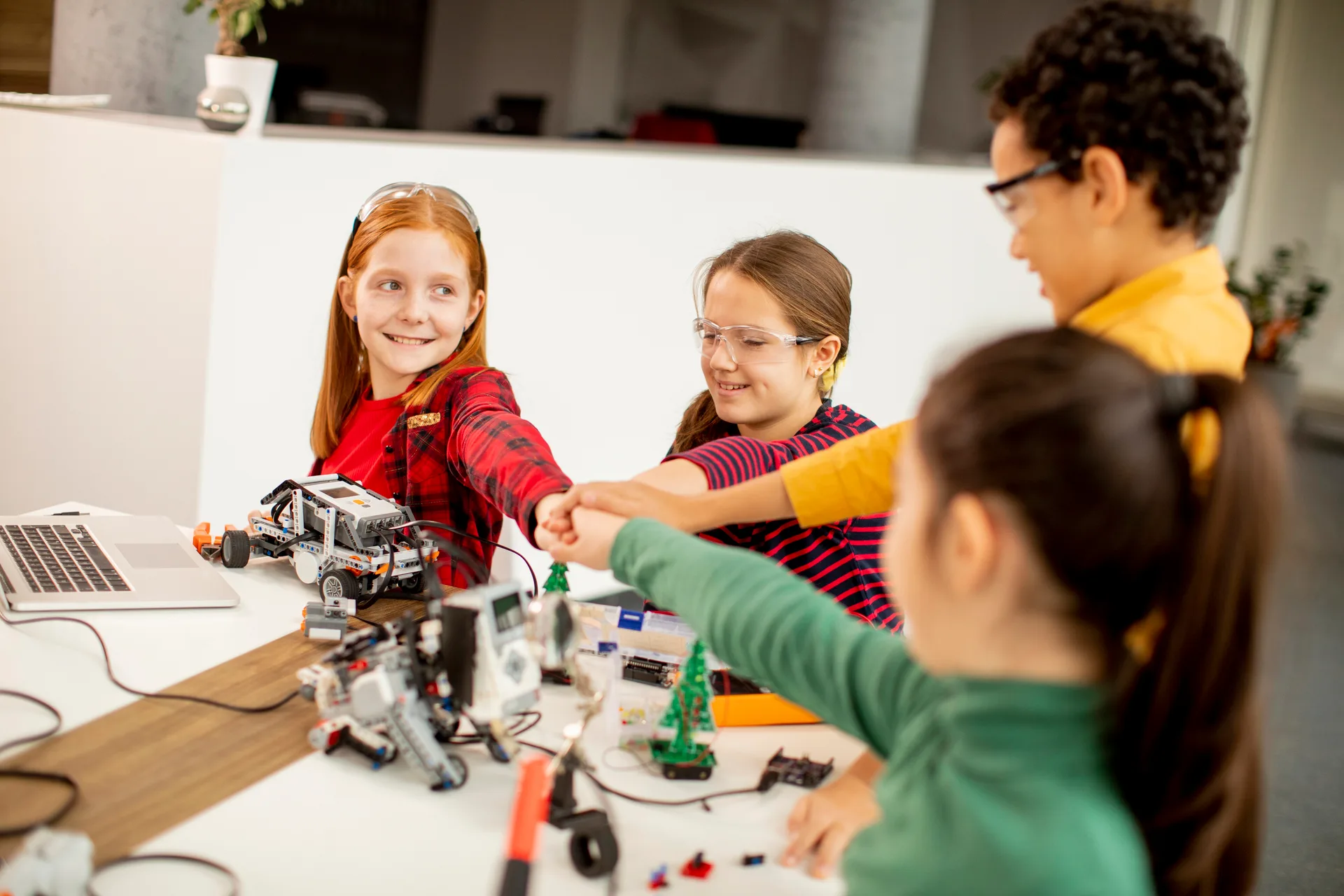
A coding environment does not share this confusion. The code either works or it does not. The robot either reaches the target or it does not. Good effort that produces incorrect code is still incorrect code, and the compiler will tell you so. This is not harsh. It is accurate.
What develops in students who spend time in this environment is a cleaner relationship between effort and outcome: they understand that both matter, that effort is required and produces eventual results, but that it does not substitute for accurate work. A student who has internalized this does not need to inflate their contribution to feel good about it. They describe what they actually did. They note what worked and what did not. That behavioral honesty is one of the practical expressions of integrity that parents value most and that transfers most directly into academic and professional life.
What It Looks Like When Integrity Is Absent in a Technology Program
It is worth describing the opposite, because it is observable and common. A technology program that does not have a strong coaching culture around accountability often produces students who develop specific avoidance behaviors: they copy solutions, they claim credit for work they did not do, they blame the platform when their code does not work, and they describe their projects in terms of what they intended rather than what they built.
These behaviors are not character flaws. They are rational responses to an environment that rewards the appearance of progress more than actual progress. A student who has learned that claiming they finished produces a better outcome than admitting they are stuck has adapted to their environment correctly. The environment is the problem.
A program that requires honest accounting of attempts, that structures coaching interactions around “what did you actually try?” rather than “did you finish?”, and that makes the distance between intention and result a normal and productive conversation rather than something to be minimized, produces students who do not need to falsify their experience. The honesty is not just valued. It is structurally useful.
For Riverside Families Thinking About Character Development
Families from Riverside who are thinking about character development programs for their children and asking whether a technology program is the right vehicle are asking the right kind of question. The technology is the environment. The character development, including integrity, is the outcome.
Love to Code Academy at 248 NE Barry Road is about twelve minutes from Riverside. The coding program and robotics program are both built around the structural conditions that produce real accountability. See the full approach at How Coding, Robotics, and Esports Build Character in Kids.