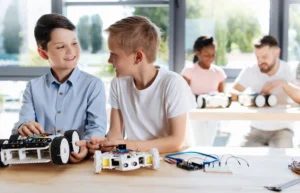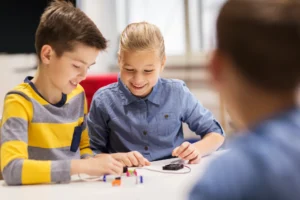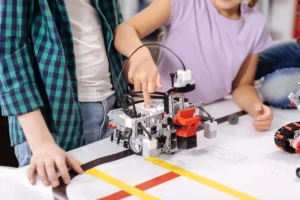
He had been at it for nine minutes without asking for help. That is not a long time, except that three months earlier he had lasted about thirty seconds.
Nothing about him had changed visibly. Same kid. Same fidgeting. Same tendency to pull his sleeve down over his hands when he was thinking. What had changed was inside the habit: the interval between encountering a problem and reaching for the exit had stretched from seconds to minutes. He was not trying harder. He had learned that staying was worth it.
Persistence is not a trait you are born with or without. It is a behavior that forms in specific environments when specific conditions are present. A coding session, when it is designed well, provides those conditions more reliably than most other places a child spends time.
What Persistent Kids Actually Do Differently
The difference between a persistent child and one who is still building that capacity is not emotional. It is behavioral. The persistent child, when they hit a problem, pauses. They generate a first attempt. They observe what happened. They adjust. They try again.
That sequence looks simple. For most children, it is not automatic. They have to learn it by practicing it in an environment that makes trying again feel like the natural next move rather than an act of will.
A coding session provides this practice at a density that is unusual. In an hour, a student might run through the try-fail-adjust cycle twenty or thirty times. Each cycle is small. The cumulative effect, across weeks and months, is not small at all. The child who has run that cycle hundreds of times has internalized it. They are no longer following a procedure. They are just doing what they do when things are hard.
Why the Feedback Loop Is the Key (Marcus)
Persistence requires one structural condition to form: the problem has to stay solvable, and the feedback on each attempt has to arrive quickly enough that the student can use it.
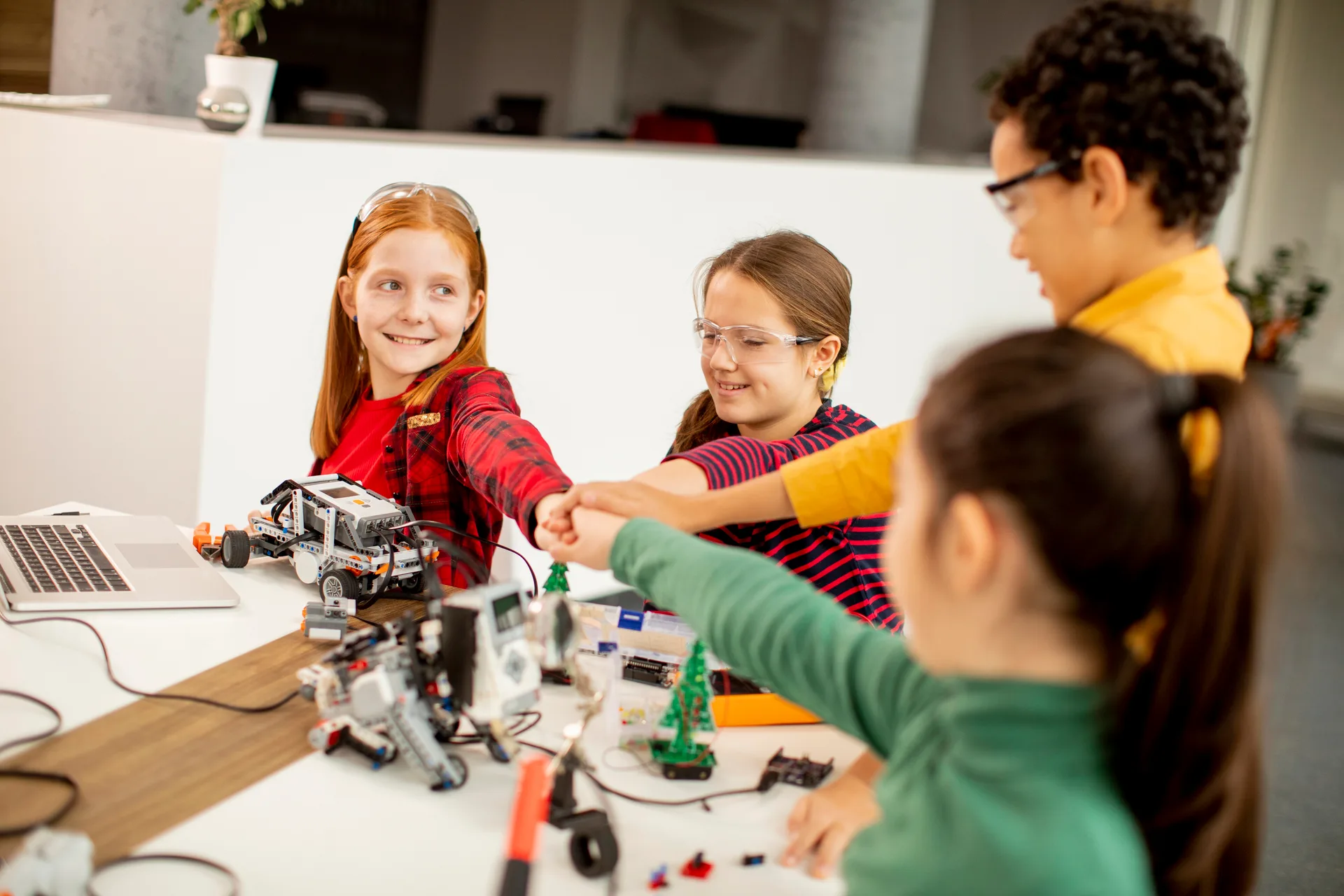
Most environments fail at one or both of these. In a school assignment, a student submits work and waits days for feedback. The feedback loop is so slow that the try-again cycle cannot form at a useful pace. In a sport, the feedback is immediate but the problem resets entirely with each rep. The student is practicing execution, not iteration.
A coding session is structurally different. The problem persists across attempts. The feedback is immediate. The compiler does not care about effort or intention. It reports exactly what happened and waits. A student who reads that error message and adjusts their approach is practicing the precise cognitive sequence that persistence is made of: observation, hypothesis, test, repeat.
The repetition of that sequence is what builds the habit. Not the content of any particular session. The structure of the feedback loop, repeated hundreds of times, across dozens of sessions. That is where the persistence comes from.
How Persistence in Code Becomes Persistence Everywhere Else
The reason coding-built persistence transfers out of the coding environment is that it is not actually about coding. The try-fail-adjust cycle practiced in a coding session is the same cycle useful in math homework, in sports practice, in learning an instrument, in navigating a difficult social situation.
A child who has run that cycle enough times that it feels like their default response to difficulty does not leave the habit behind when they close the laptop. The habit is not attached to the technology. It is attached to the child.
Parents describe this transfer specifically. A child who used to give up on math homework in two minutes is now sitting with it for eight. A child who quit every extracurricular when it got hard is staying with something difficult for the first time. Those behaviors were not taught at home. They were built in a coding session and then appeared somewhere else, quietly, without announcement.
What This Means for Choosing a Program
Not every coding program builds persistence. A program that rescues students from failure too quickly produces students who cannot sit with hard problems. A program where the coach answers before the student has attempted produces students who wait for answers.
The structural markers of a program that builds persistence are: a coaching culture that asks “what have you tried?” before offering guidance, challenges that are genuinely hard rather than easy enough to avoid frustration, and a progression framework that tracks the try-again behavior alongside technical skill. When those three things are present, persistence develops. When any of them is absent, it tends not to.
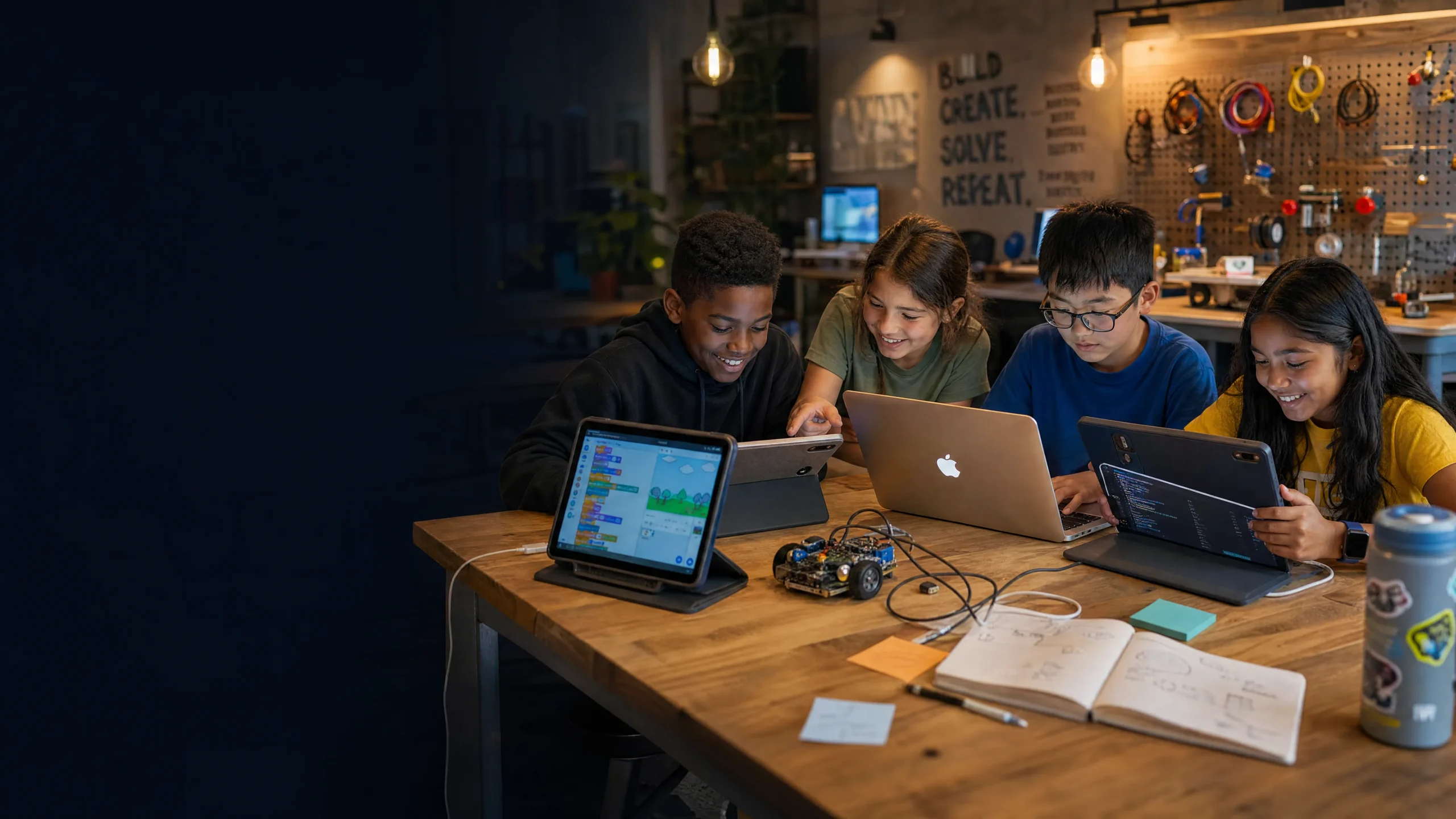
Why School Does Not Build This Kind of Persistence
The persistence that forms in a well-designed coding environment is specific in a way that the persistence available in most school settings is not.
School produces persistence in the sense of completion: finishing an assignment, getting through a test, persisting through a unit that is not interesting. That is a valuable skill. It is not the same as the persistence formed in a coding session, where the challenge is iterative rather than terminal. In school, a student finishes the problem and moves on. In a coding session, the student solves the problem and immediately encounters a harder version of the same kind of problem. The persistence required is not the persistence of completion. It is the persistence of someone who accepts difficulty as an ongoing condition rather than a temporary obstacle.
That distinction matters because the challenges of adult life are almost never single problems with clear endpoints. They are iterative. They require staying with something that keeps presenting new forms of difficulty. A child who has practiced iterative persistence, in a setting where the try-again cycle is the entire design, is better prepared for that reality than a child who has only practiced completion persistence.
What Happens When the Persistence Habit Is Fully Formed
A student whose persistence habit has fully formed looks different from the outside in a specific way. They do not visibly brace themselves when a hard problem appears. They do not perform effort in the way that students who are still building the habit sometimes do, the exaggerated sighs, the looking around the room for witnesses to their difficulty. They just work.
The habit is no longer a choice. It is a default. When a problem arrives, the response is automatic: try something, observe, adjust, try again. The student is not deciding to persist. They are just doing what they do.
That automaticity is the goal of the program. It takes months to build and it does not happen all at once. But once it is present, it is genuinely durable. A student who has made the try-again response automatic does not lose it when they leave the coding environment. It belongs to them, not to the platform.
For Riverside Families Looking for This Outcome
Families from Riverside who are asking what a kids technology program will actually change in their child are asking the right question. The change that matters most, the one that shows up in school, in sports, in life, is this: a child who handles difficulty differently.
Love to Code Academy is at 248 NE Barry Road, about twelve minutes from Riverside. The after-school program is built around the structural conditions that make persistence develop. The coding and robotics are the environment. The persistence is the outcome.