
A girl in my class — eight years old — spent three sessions trying to get her character to jump in a Scratch project. Three sessions. That is ninety minutes of debugging something that should have taken five minutes if it had worked the first time.
She did not ask for help once. Not because she was too proud to. Because by the third session she had stopped believing the problem was unsolvable. She had started believing she was the one who was going to solve it. When it finally worked, she did not celebrate loudly. She looked at it for a moment and then quietly started on the next thing. That is not a story about coding. That is a story about persistence.
Technology is the environment. Character is the goal. The traits kids develop through coding, robotics, and esports — persistence, teamwork, integrity, self-control — are the ones that determine everything that comes after.
Persistence — Why Coding Is One of the Best Environments in Existence to Build It
Here is the honest truth about persistence that most people skip: you cannot teach it in a lecture. You cannot build it through encouragement alone. Persistence grows in one specific environment — one where a student encounters a problem they cannot immediately solve and chooses to stay anyway. The environment has to be hard enough that the choice is real.
Coding is that environment. The feedback loop in a coding session is unforgiving in the best possible way. The code either runs or it does not. The error message tells the student exactly what is wrong. There is no room for “I sort of got it” or “close enough.” There is only “it works” and “it does not work yet.” That gap — between “does not work yet” and “works” — is where persistence lives.
What makes a character-based coding program different from a regular coding class is what the instructor does in that gap. At Love to Code Academy, instructors are trained not to close that gap for the student. They ask questions. They guide. They hold back. The productive struggle is the lesson — and every student who stays in it one more minute than they would have yesterday is building persistence in a way that transfers to every hard thing they encounter outside the classroom.
Students in the coding program at LTCA build persistence in every session. Not because we put it on a poster. Because the environment makes it necessary and the coaches name it when they see it.
Teamwork — How Robotics Develops Collaboration Differently Than Team Sports
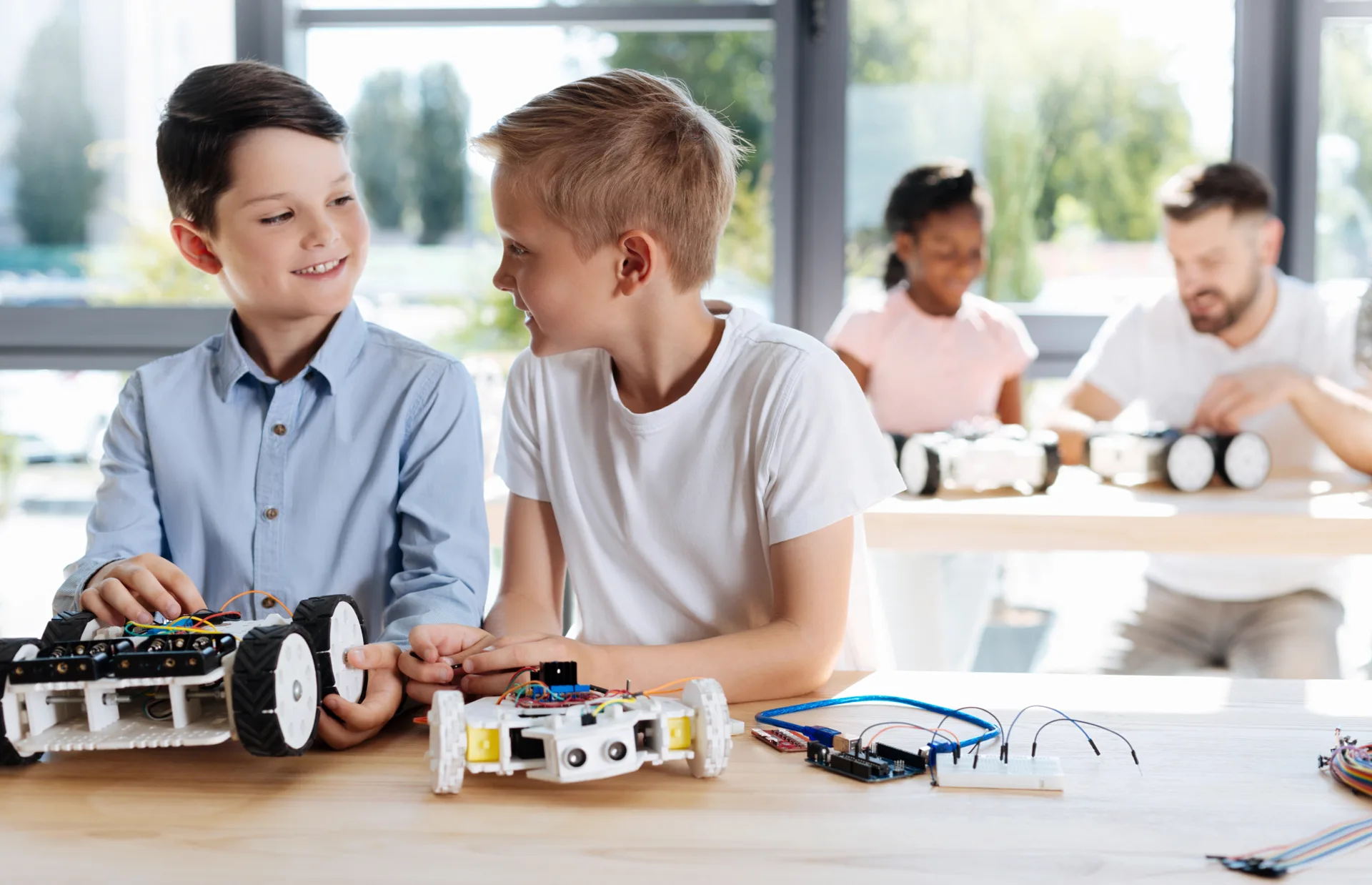
I notice the teamwork differently in robotics than in any other program environment I have worked in. In team sports, collaboration often has a clear hierarchy — the best player makes the plays, everyone else supports. In robotics, the student who figures out the build flaw is just as essential as the student who programs the motion sequence. The dependency is more evenly distributed.
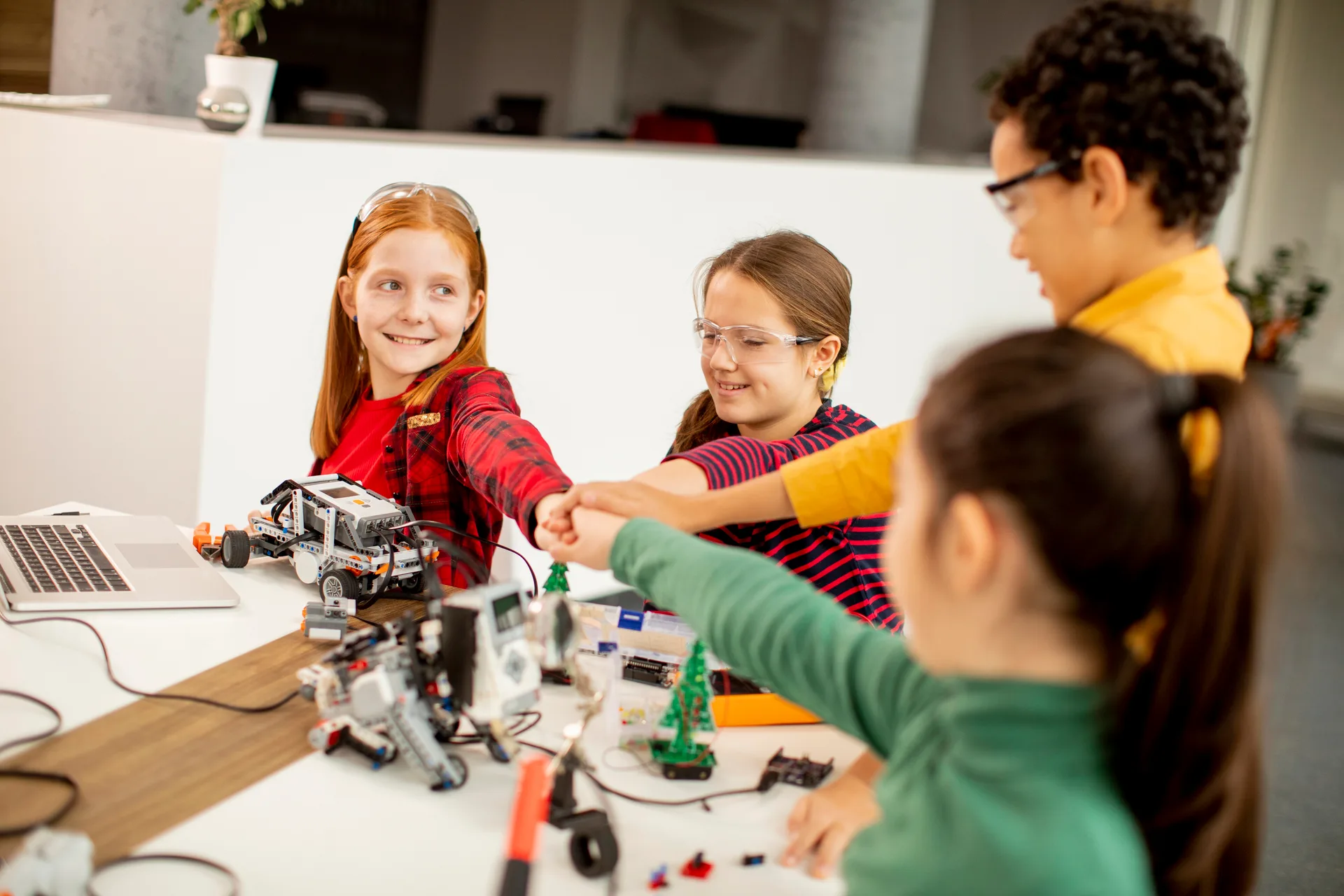
What I see in robotics sessions is students learning to trust people who are doing things they do not fully understand. One student programs while another builds while a third documents the design. If one role is done poorly, the whole robot suffers. There is no hiding. There is no coasting. The interdependency is real.
The robotics program at LTCA structures this deliberately. Students are assigned roles, but they rotate. Every student learns what every other student’s role requires. That cross-training produces empathy that team sports rarely generate — because you have to understand what someone else’s job actually involves before you can collaborate with them at the level that winning requires.
Self-Control — What Esports Teaches About Managing Frustration and Impulse
Self-control is most coachable when things go wrong. That is a truth most youth programs avoid by designing experiences where things mostly go right. Esports does not do that. Esports is built on the premise that you will lose matches, make strategic errors, and face opponents who are genuinely better than you on a given day. Self-control is not a character lesson in esports. It is a competitive requirement.
A student who slams their controller after a loss signals to their team that their emotions are a risk factor. Students learn this not from a rule, but from watching what it costs — in team confidence, in focus, in the match itself. The feedback is real and it is immediate. No lecture required.
What our coaches do at LTCA is name what they see in the moment. When a student takes a hard loss and stays composed, the coach says: “That is self-control. You managed yourself when it was hard.” When a student loses composure, the coach addresses it directly and names the trait that was missing. The repetition of that naming — in every session, across every competitive moment — is how character becomes a habit rather than a lesson.
Integrity — How Technology Projects Create Real Accountability
Integrity is hard to teach and easy to fake. The environments where it actually develops are the ones where honesty has a real cost and the student chooses it anyway.
Technology projects create those environments. A student who tells their team the robot is ready when it is not discovers immediately, in front of everyone, what that dishonesty costs. A student who says “I do not know why it is not working” instead of guessing or blaming the tools is practicing integrity in a moment where the easier thing would be to deflect. These are not manufactured dilemmas. They are the natural consequence of doing real work under real time pressure with real teammates who depend on you.
At LTCA, instructors look for these moments and name them. “You told your team the truth about what was wrong even though it was uncomfortable. That is integrity.” That specific naming — connecting the behavior to the trait — is what makes the lesson stick across sessions, not just in the moment it happens.
Confidence — The Specific Moments That Build It
Confidence is not given. It is built from specific moments of doing something hard and discovering you can. I have watched a lot of children discover this for the first time inside a technology session — and the look that crosses their face when it happens is the same every time. Not loud. Not showy. Quiet, and unmistakable.
What builds confidence in a technology environment is not the praise. It is the experience of earning something that was genuinely difficult. The belt promotion ceremony at LTCA is designed around this. Students who advance to the next belt level have demonstrated both technical skill and character development required at that level — and when they stand in front of their peers and advance, they know they earned it. Not because someone told them they were ready, but because they demonstrated it.
Parents in Riverside, MO and across the northland tell us the same thing: their child came home different after their first belt promotion. Not louder. More settled. That is what earned confidence actually looks like.
The Difference Between Character as a Promise and Character as a Practice
Every youth program promises character development. You will find the words “confidence,” “teamwork,” and “leadership” in the marketing materials of nearly every kids activity that exists. The words are not the differentiator. The practice is.
A character-based coding program is not one that mentions character. It is one where character development is structural — where specific traits are named in every session, where advancement requires demonstrated character, and where the instructor’s job is to develop the whole student, not just the technical skill. The difference between character as a promise and character as a practice is the difference between a poster on a wall and the reason a student tries again after they fail.
At Love to Code Academy, the character framework — four pillars, ten specific traits — is not a marketing document. It is the operating system every coach runs in every session. The technology is real. The challenges are meaningful. And the coaching is intentional about developing the character, not just the code.
If you want your child in an environment where character is the goal — not just the talking point — enrollment is open. You can also explore our camps as a starting point.