
Character and Confidence
How Technology Can Help Your Child Grow Confidence, Not Just Skills
5 min read · Published March 31, 2026
Most parents today feel stuck in the same cycle. Your child spends time on screens, but you’re not sure that time is helping them grow. It might be entertaining. It might even look educational. But when you step back, you’re left wondering: Is this actually helping my child become more confident, more capable, or more prepared for life? The question of how technology helps kids grow confidence isn’t really about technology at all. It’s about what happens to your child while they’re using it.
The Real Problem with Screen Time
The problem isn’t technology. The problem is how it’s being used.
When technology is passive, kids consume. When technology is structured the right way, kids create, collaborate, and push through challenges. That difference changes everything. Because growth doesn’t come from watching. It comes from doing something that requires effort, interaction, and persistence.
Think about the difference between a child watching someone else build something and a child who has to build it themselves, who has to try, fail, adjust, and try again. The second child is doing something the first one never does: they are learning what they are made of. That is where real confidence begins. The activity on the screen matters far less than what the child is being asked to do with it.
How Love to Code Academy Uses Technology Differently
At Love to Code Academy, we see technology differently. We don’t treat coding, robotics, or esports as subjects to learn. We treat them as environments where kids develop:
- Confidence when they solve problems
- Teamwork when they build with others
- Persistence when things don’t work the first time
- Responsibility when they own their work
- Leadership when they help others succeed
Technology is the environment. Character is the outcome.
Every session is designed so that the challenges students face, the code that won’t run, the robot that won’t respond, the competition round that doesn’t go their way, become the moments where real growth happens. Coaches don’t step in and fix things. They guide students through the experience of figuring it out themselves. That distinction is what separates a technology activity from a character-building one.
Confidence Is Built Through Doing, Not Watching
Confidence doesn’t come from understanding something. It comes from experiencing small wins.
A student struggles to get their code to run. They try again. They fix one piece. Then another. Then suddenly it works. That moment matters, not because of the program they built, but because they proved to themselves: “I can figure this out.” That is confidence. Not the kind that comes from being told you’re capable, but the kind that comes from discovering it yourself.
Parents notice this shift in unexpected ways. A child who used to ask for help the moment something got hard starts pausing before they give up. A student who thought of themselves as “not a tech person” starts talking about their projects at dinner. The wins they earn inside the academy begin to show up in how they carry themselves outside of it, in the classroom, in sports, in friendships. Confidence built through real experience doesn’t stay in one place. It travels.
Teamwork Happens When Kids Actually Need Each Other
Most activities talk about teamwork. Few require it.
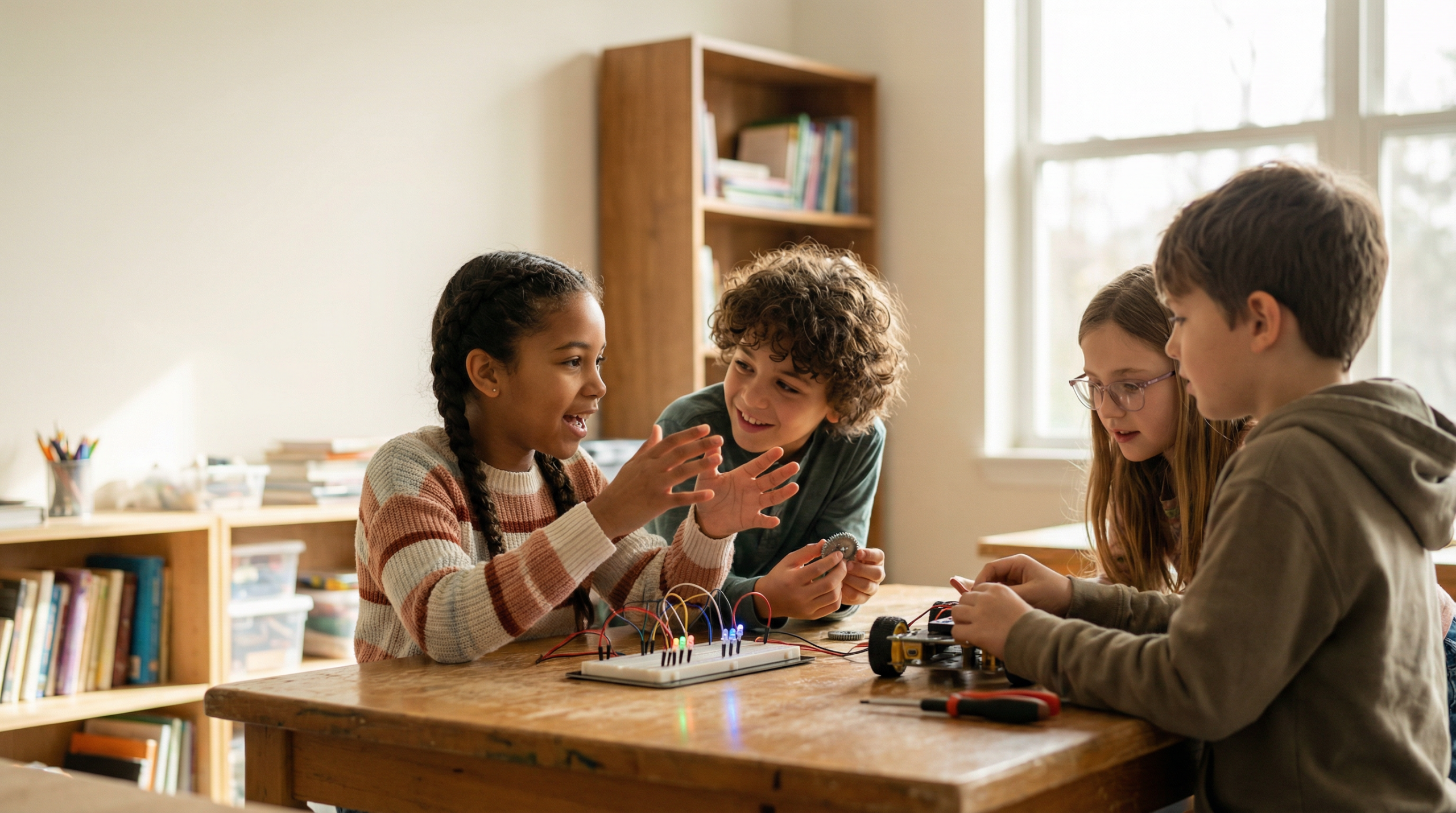
When students work on shared projects, they divide roles, they ask for help, they explain their thinking, and they adjust when things don’t go as planned. Collaboration isn’t something coaches prompt students to practice. It’s something the work itself demands. You can’t build a functioning robot or execute a team strategy while guarding your ideas or refusing to listen to someone else.
You’ll see a student who used to work alone start contributing ideas. You’ll see another begin encouraging a teammate instead of getting frustrated. A child who once held every role tightly starts learning to trust. A student who stayed quiet starts finding their voice because the team actually needs to hear from them. That is teamwork becoming real, not performed for a grade, but practiced because the situation requires it.
These experiences connect directly to the Relationships pillar of the LTCA Character Framework, the expectation that students learn to treat others well, work across differences, and contribute to a team with both competence and respect.
Persistence Only Develops Through Challenge
If something is too easy, kids don’t grow. If something is too hard, they shut down. The right environment sits in the middle, where students can struggle enough to grow but are supported enough to keep going.
Students hit problems they can’t solve immediately. They feel stuck. They want to quit. But instead of stepping in and fixing it, coaches guide them to keep going: try again, break it down, ask a teammate, look at it differently. Over time, they stop seeing challenge as a signal to quit. They start seeing it as part of the process. That is persistence, and it can only be developed in an environment that doesn’t remove the difficulty.
What surprises many parents is how quickly this transfers outside the academy. Families report changes at home, a child who pushes through a difficult homework problem instead of walking away from it, a student who stays in a sport through a losing season instead of asking to quit. The persistence they practice in the academy becomes the persistence they reach for when things get hard anywhere else. Character, once formed, doesn’t stay in one room.
What This Looks Like in Real Life
All three of these qualities, confidence, teamwork, and persistence, can sound abstract until you watch them develop in front of you.
Ethan, a 4th grader, came in excited about games but quick to give up when something didn’t work. During a project, his code kept breaking. At first, he pushed his laptop away and said, “I can’t do this.” Instead of solving it for him, his instructor guided him to try one small step. Then another. After working through it, he finally got it to run. He didn’t celebrate loudly. He just looked at the screen and said: “Oh… I fixed it.”
Over the next few weeks, something changed. He stopped quitting early. He started helping others when they got stuck. The student who couldn’t get past his own frustration became someone others looked to when they were stuck. That’s what growth looks like, not a dramatic transformation, but a quiet, steady shift in how a child sees themselves and how they show up for others.
The Shift Parents Notice
Technology isn’t the goal. It’s the place where your child learns how to handle challenges, work with others, and believe in themselves.
When parents describe the changes they see, they rarely lead with technology. They talk about the confidence they notice when their child takes on something difficult at school without immediately looking for an exit. They describe the maturity they see when their child manages frustration differently than they used to. They mention the moment their child looked out for a sibling or a friend the same way a student looks out for a teammate. These are not the results of a coding class. They are the results of an environment that expected something more, and gave students the structure and support to rise to it.
The academy is the training ground. Life is where the results show up.
Ready to See This for Your Child?
If you’re starting to think differently about how your child uses technology, the next step is simple. Explore how our program helps students build confidence, teamwork, and character through real experiences. See how Love to Code Academy works
Want to go deeper into this topic? Read more in our Growing Kids Through Technology series, where we explore the specific ways structured technology experiences shape the skills and character your child carries far beyond the screen.