The programs built around robotics have a particular track record. Not because robots are more engaging than other tools, though kids do find them compelling. Because the structure of a robotics project reliably creates conditions for growth that other activities do not.
Parents who enroll their children in robotics classes for kids often come in expecting their child to learn engineering concepts. That happens. What they do not fully anticipate is the other category of results: the ones that show up at home, in school, and in how their child approaches problems that have nothing to do with a robot.
Teamwork Through Shared Physical Outcomes
A robotics project has a physical result. The robot either does what the team programmed it to do, or it does not. That binary outcome creates a kind of accountability that is harder to generate in other group activities.
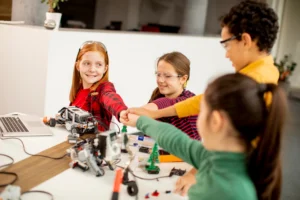
When a team of students is working together and the robot falls off the course, everyone can see exactly what happened. There is no ambiguity about whether the outcome was good. That clarity forces real conversation: what did we miss, what should we change, who noticed what I did not. The teamwork that emerges from a robotics session is not assigned teamwork. It is functional teamwork, because the alternative is a robot that does not work.
Parents consistently describe a version of the same shift: their child started listening differently. Started asking teammates questions before offering their own answer. That change is not accidental. It is what happens when the work requires it.
Self-Control Under Genuine Pressure
A robot that will not cooperate is genuinely frustrating. The code looks right. The build looks solid. The robot still goes the wrong direction. That moment, when a student has tried three approaches and none of them worked, is not a moment most activities manufacture reliably.
Learning to manage that frustration without shutting down, without blaming a teammate, without giving up on a problem that is solvable: that is self-control developed through real stakes. Not practiced through a hypothetical scenario, but tested against an actual problem the student cares about solving.
The students who develop self-control inside a robotics environment carry it out with them. A parent whose child used to shut down over homework frustration notices that the frequency and intensity change over time. The skill transfers because it was built on something real.
Computational Thinking: The Skill Behind the Robot
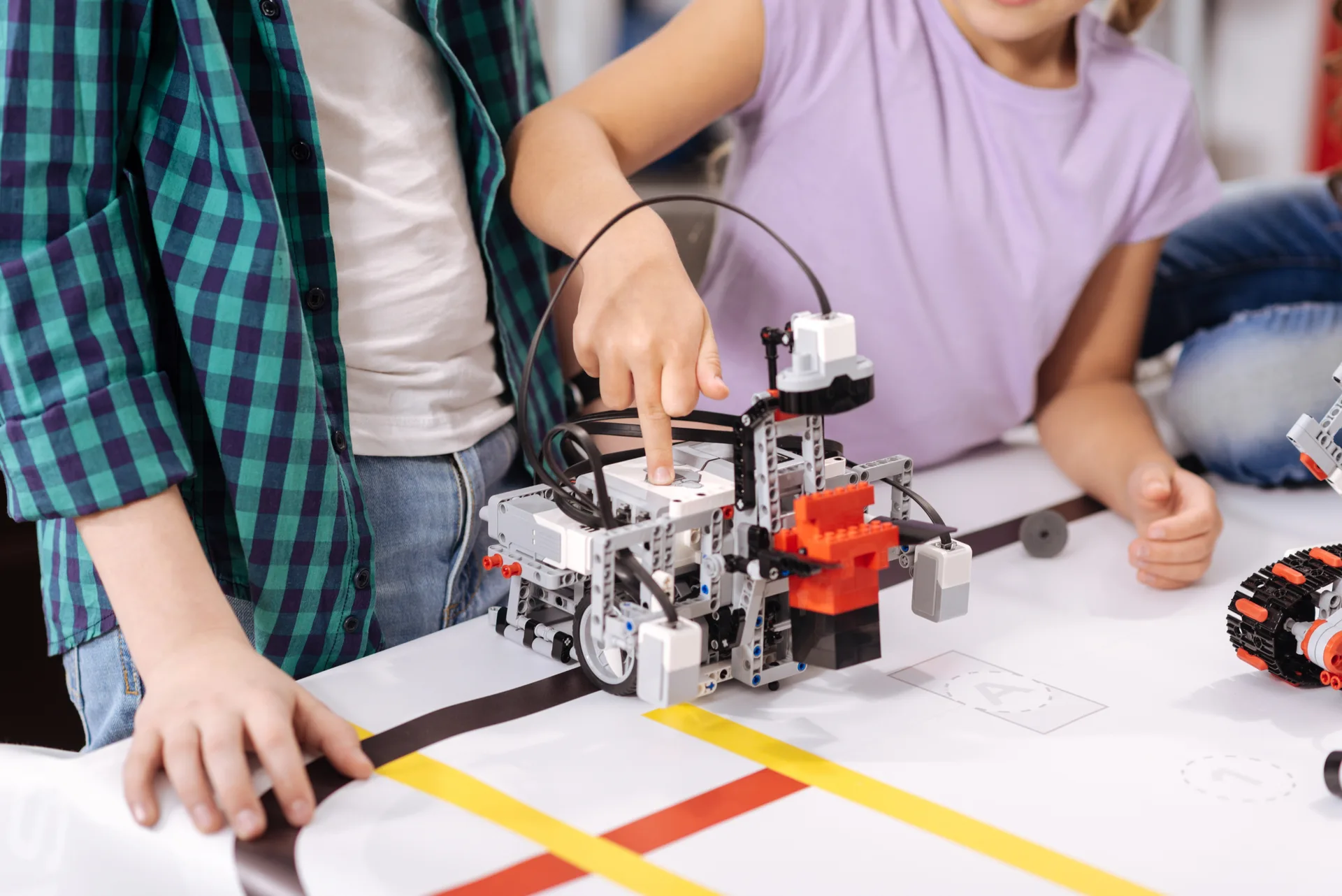
Every robotics session is, underneath the hardware, a programming session. Students are not just building physical structures. They are writing instructions that tell the robot what to do, sequencing those instructions in the correct order, and testing whether the logic they designed produces the result they intended.
This is computational thinking in a tangible form. The robot makes the logic visible. If a student writes an instruction sequence that has a flaw in it, the robot physically does the wrong thing. There is no abstracting away from the consequence. The feedback is immediate, physical, and undeniable. It teaches debugging, logical sequencing, and iterative problem-solving faster than most classroom environments can.
Students who develop computational thinking through robotics bring that skill to every other area of structured learning. They begin to approach academic problems the way an engineer approaches a build: what is the goal, what is the first step, what will I test, and what will I do when the first version does not work.
Engineering Mindset and the Habit of Iteration
Professional engineers do not build a perfect system on the first attempt. They prototype, test, observe, modify, and test again. That iteration loop is one of the most valuable professional habits a person can develop, and robotics programs are one of the few youth environments where it is practiced explicitly and repeatedly.
A student who goes through a full semester of after-school robotics has iterated on a physical system dozens of times. They have experienced what it feels like to watch something fail, diagnose why it failed, make a specific change, and observe whether the change produced the desired result. That experience builds a relationship with failure that is fundamentally different from avoidance. It builds a relationship where failure is information.
What Robotics Teaches at Different Ages
The specific benefits of robotics shift depending on where a child is developmentally.
In the younger grades, kindergarten through second grade, the primary benefit is exposure to cause-and-effect thinking in a physical, hands-on format. A K-2 student who builds a simple LEGO Education structure and programs it to move has encountered the foundational concept that their instructions have physical consequences. That is not a trivial insight for a six-year-old.
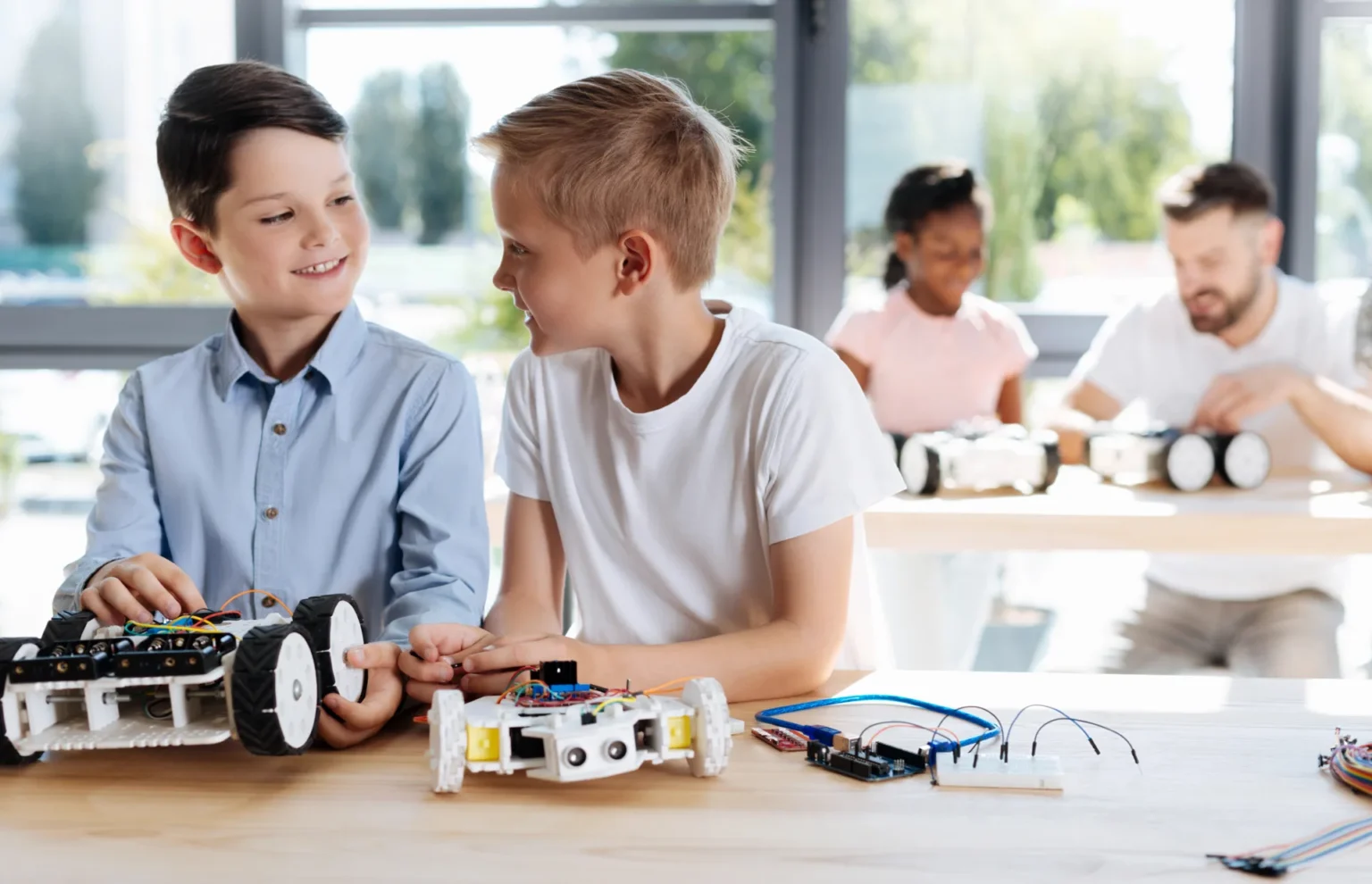
In grades 3-5, robotics begins to develop more sophisticated teamwork and problem-solving skills. Students can handle multi-step build challenges, work productively in pairs or small groups, and begin to carry specific roles within a team while rotating between them.
In middle school, platforms like VEX Robotics introduce competition-level complexity. Students are designing systems that compete against other teams’ designs, which introduces strategic thinking, iterative optimization, and the kind of pressure management that high-stakes environments require. The benefits at this stage begin to look more like leadership development than basic STEM education.
The Home Effect: What Robotics Parents Tend to Notice First
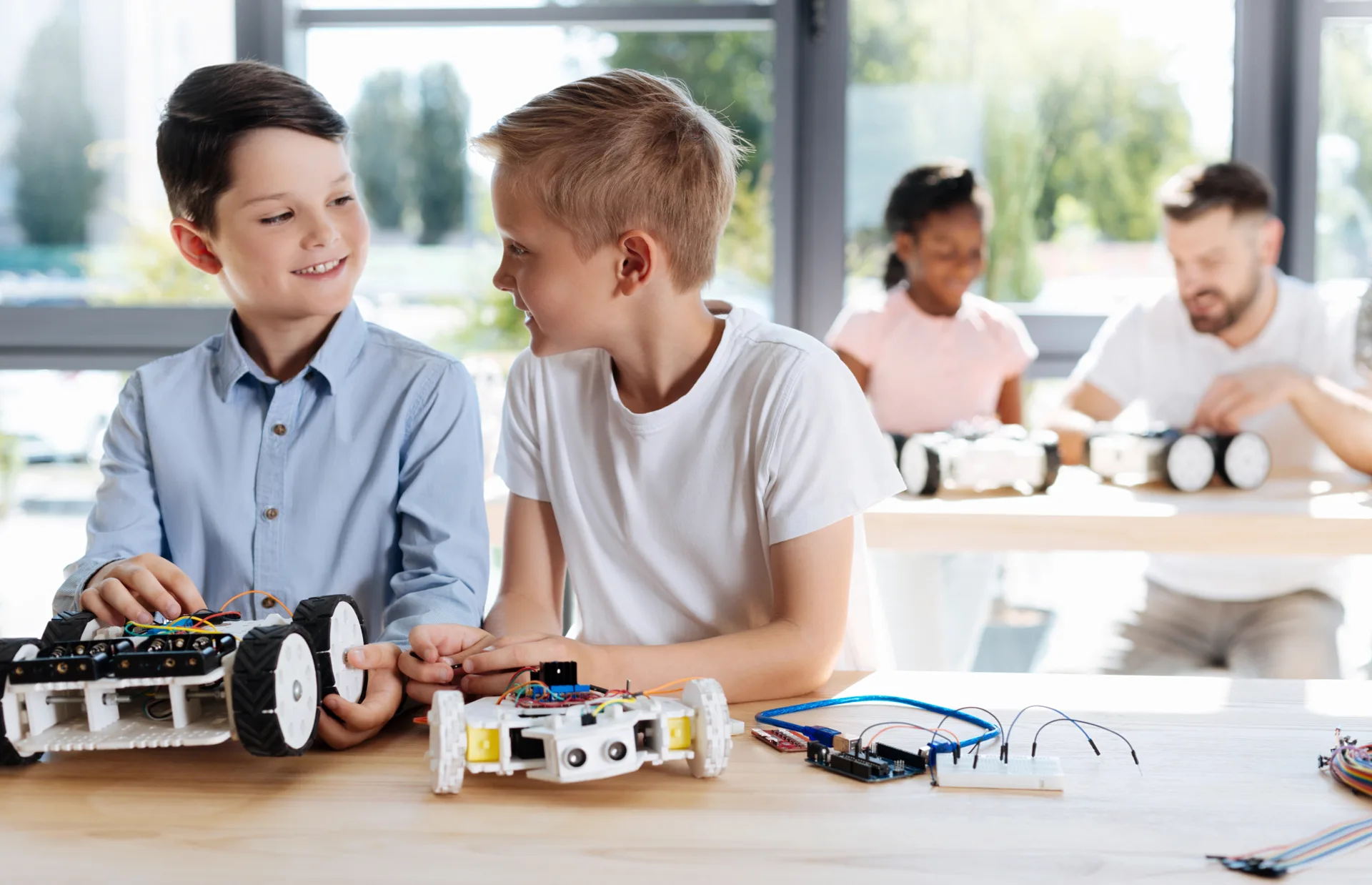
The first place the benefits of robotics show up is rarely in a project showcase or a belt ceremony. It is at home, in ordinary moments, and it almost always surprises the parent when it happens.
A child who used to abandon a puzzle after two failed attempts now sits with it longer. A child who used to ask for help at the first sign of difficulty now tries three things before calling out. These are not dramatic transformations. They are quiet shifts that become visible gradually, and then all at once.
What parents are observing is the transfer of the persistence and self-regulation skills developed inside the robotics environment into the rest of the child’s daily life. The robot was never the point. The capacity to stay with a problem without giving up was always the point. When that capacity starts showing up in homework, in sports, in sibling conflict resolution, the program has done something more lasting than teaching a child to build a machine.
Parents who have enrolled their children in after-school robotics for a full year describe this transfer as the outcome they mention most when recommending the program to other families. The technical skills are real and valued. But the behavior change is what they talk about first.
For Gladstone Families Considering Robotics
Gladstone families are among the closest to our Kansas City location at 248 NE Barry Road, and a meaningful number of our robotics students make that short drive each week. What they find is that the commute becomes part of the week: not a chore, but a commitment the student asks to keep.
The benefits of kids robotics classes that parents in Gladstone talk about most are rarely the technical ones. They are the ones that show up on Tuesday morning when homework gets hard. The ones that show up at practice when a play does not work. The ones that show up anywhere a child encounters a problem they cannot immediately solve.
Robotics teaches persistence, self-control, teamwork, and the engineering mindset that turns obstacles into problems worth solving. That is what the build is for, and that is what lasts.