
Why Robotics Classes for Kids Build Character and STEM Skills
A small yellow wheel spins in the empty air. A student-built rover teeters on the edge of a wooden test ramp, one nudge away from falling. The room is quiet. You can hear a laptop fan and the soft clicking of gears. Ten-year-old Marcus stares at his stuck machine, brow furrowed, thinking hard. From the doorway his father, Dan, watches without a word. At home, this is the moment Marcus might have given up and swiped over to a game. But here, inside our robotics classes for kids, the story goes a different way. Marcus takes a breath. He turns to his teammate and points at the drive axle. That is where the real learning starts. Not because the robot worked, but because it hit a wall that only patience and teamwork could get past.
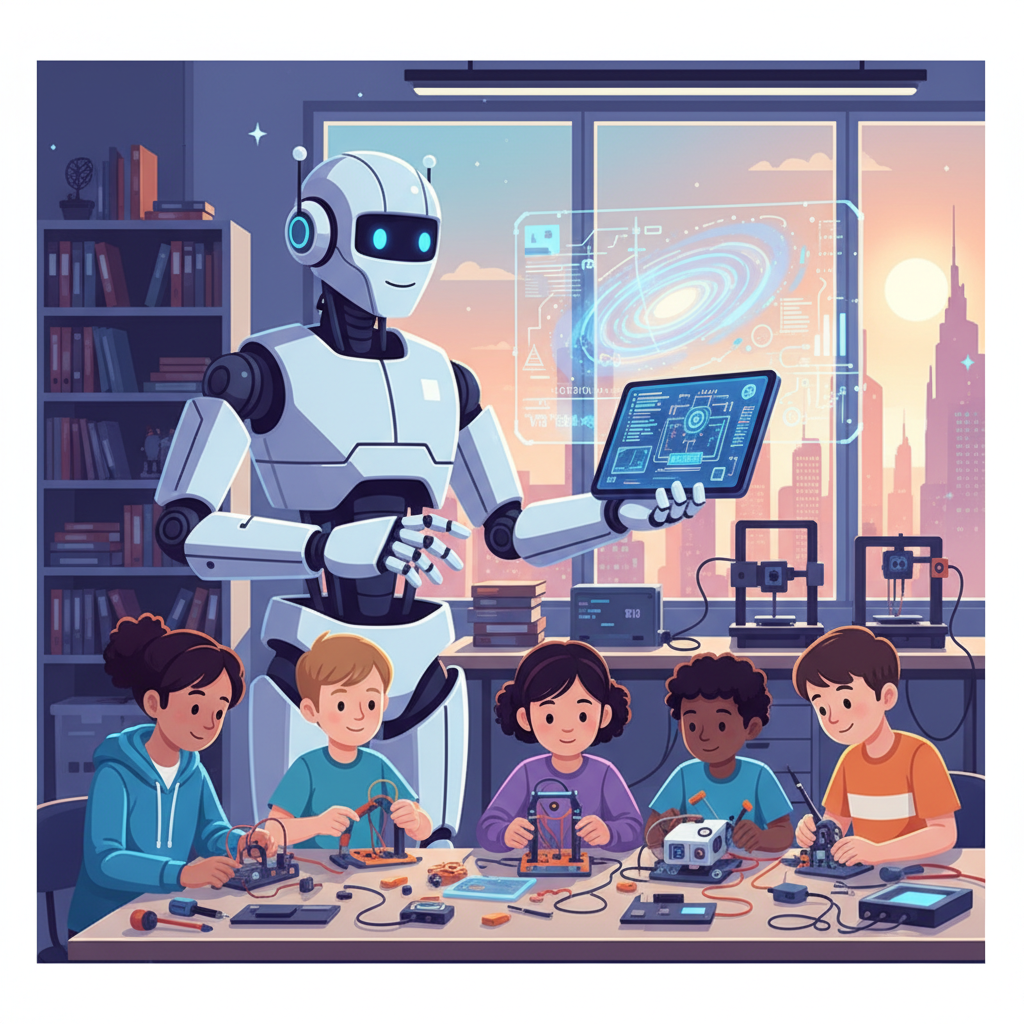
We built this space with one goal in mind. Technology should be more than a digital playground. It can be a training ground for life. At Love to Code Academy, the tech is simply the environment. The growth of the child is the point. By combining hardware engineering with computer science, we help students build the life skills that carry them forward. We hand them real parts to build with and real code to write, so they move from passive watching toward active creating. Here is how working with real machines in our STEM programs changes the way young minds learn, work together, and grow into tomorrow’s leaders.
Turning Passive Screen Time Into Active Growth
Many parents worry about the hours their children spend staring at a screen. Tablets and games hand out instant rewards. One tap and something happens, with no real effort behind it. When parents first walk into our robotics classes for kids, they often want to turn that digital curiosity into something healthier and more productive. Building with real hardware is the bridge that gets them there.
Working with a physical machine asks for a different mindset than playing a game. There is no reset button for a gear you put in backward. You have to study the machine, follow the path of the power, and rebuild it with your own hands. That process changes how a child sees themselves. They stop being just a consumer of entertainment. They become a maker. Our robotics classes for kids give children a structured place to treat every challenge as a puzzle waiting to be solved. We often compare our academy to a martial arts school. A dojo uses physical forms to build discipline, respect, and perseverance. We use hands-on hardware to build the same character. The tools differ, but the mission is identical.
As students dig in, they start to see technology as something they can shape and control. The devices around them stop feeling like sealed, magical boxes. They turn out to be systems of logic and mechanics that a kid can master. That shift plants a deep sense of agency that stays with them far beyond our lab.
Making Abstract Logic Real and Touchable
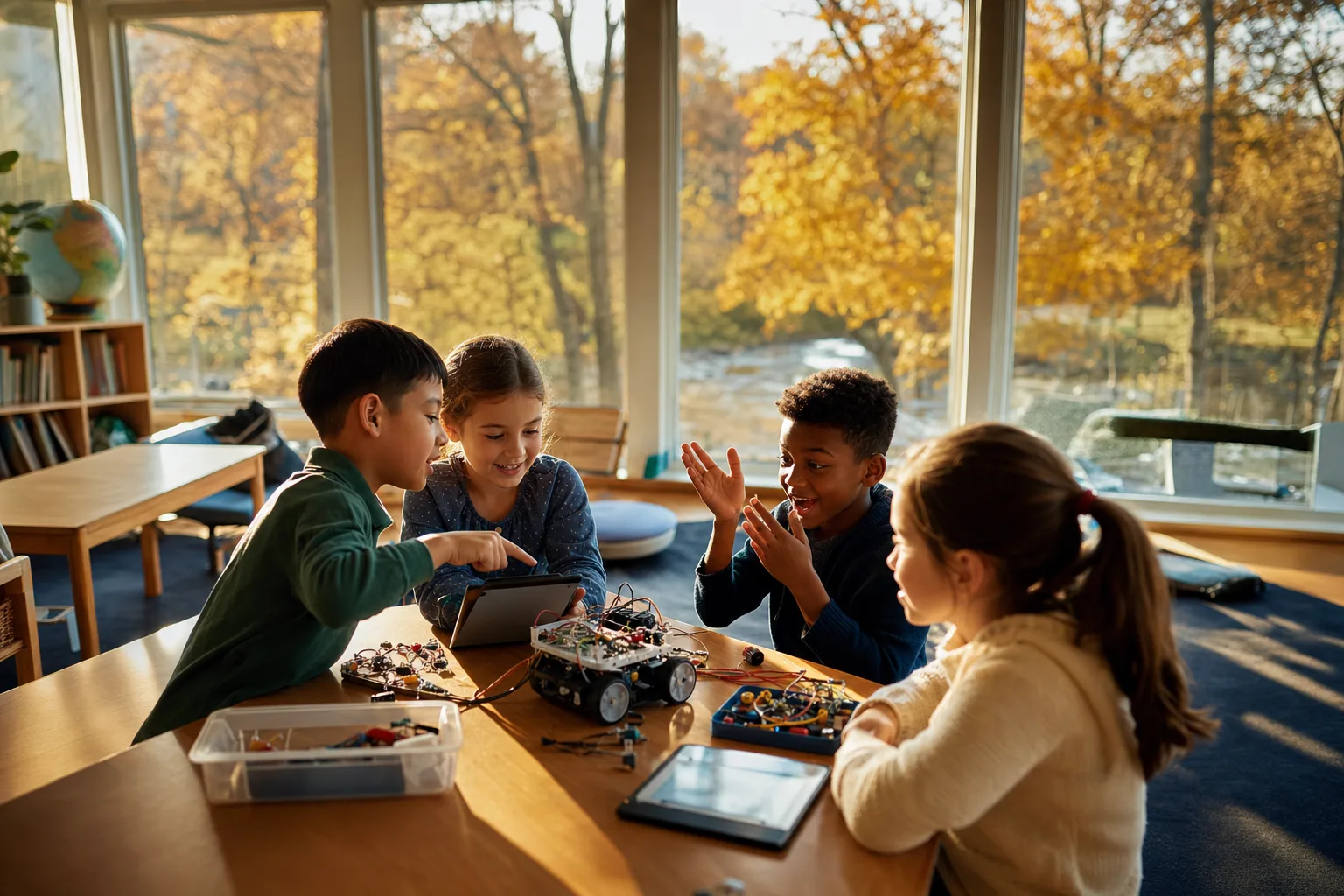
Pure software can feel cold and far away to a young child. Writing code to nudge a cartoon across a screen holds attention for a few minutes, then the link to the real world slips away. The moment we add real hardware to our robotics classes for kids, computer science becomes something you can touch. A line of code stops being text on a screen. It becomes an order that spins a motor, wakes a sensor, or blinks a light.
That fast feedback is powerful. A mistake in a software-only program might return a silent error. The same mistake in a real robot sends the machine spinning in circles or driving straight off the table. Cause and effect are right there, clear and hard to forget. Students do not need an instructor to point out the bug. Their creation shows them exactly what went wrong.
Working with physical microcontrollers, servomotors, and distance sensors pushes students to reckon with the real world. They have to weigh friction, battery life, gravity, and balance right alongside their code. This full-picture approach means students are not just memorizing syntax. They are building a real feel for how software and hardware work together to solve genuine problems.
Building Real Friendships and True Teamwork
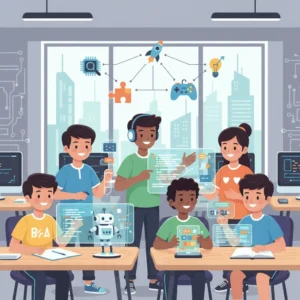
The old picture of a programmer is a lonely one. A person alone in a dark room, glued to a monitor. We push back on that image every single day by designing our labs around teamwork. Parents like Tammy, who want their children building friendships and practicing teamwork outside of sports, find a warm community here. We use cooperative building sets, including LEGO® robotics, throughout our robotics classes for kids so that working together is baked into every project.
Students rarely build alone. We pair them up to face challenges as a team, with clear roles like lead builder and lead programmer. Those roles call for steady communication, give and take, and support. When a robot cannot finish a maze, the programmer cannot just blame the builder, and the builder cannot just blame the programmer. They sit down together, study the failure, and work out one shared fix. This is our Relationships Pillar in action, with its focus on Teamwork, Harmony, and Sportsmanship.
Working side by side, students learn to share materials, take turns, weigh different ideas, and ride out the normal friction of group work. They practice real listening and learn to say what they mean clearly. We watch them celebrate shared wins with high-fives and pick each other up after setbacks. The bonds built over a shared toolbox turn out to be every bit as strong as the ones built on a field.
Turning Setbacks Into Productive Struggle
A lot of modern schooling leans toward clearing every obstacle out of a child’s way. We see it differently. Shielding students from difficulty robs them of the chance to build resilience. Our robotics classes for kids are built on purpose to include real challenges and honest setbacks. When a student builds a mechanical arm to lift an object, it will almost certainly drop that object the first few tries. That is not a flaw in the lesson. That is the lesson.
This is where our Responsibility Pillar lives, with its focus on Persistence, Self-Control, and Integrity. When a machine fails, our instructors do not swoop in and fix it. We run our Coaching Loop instead: Observe, Name, Reinforce, and Repeat. We watch how the student handles the failure. We ask questions that spark their own thinking rather than handing over the answer. We ask what they have tried, what they think the real cause might be, and who on the team they can lean on.
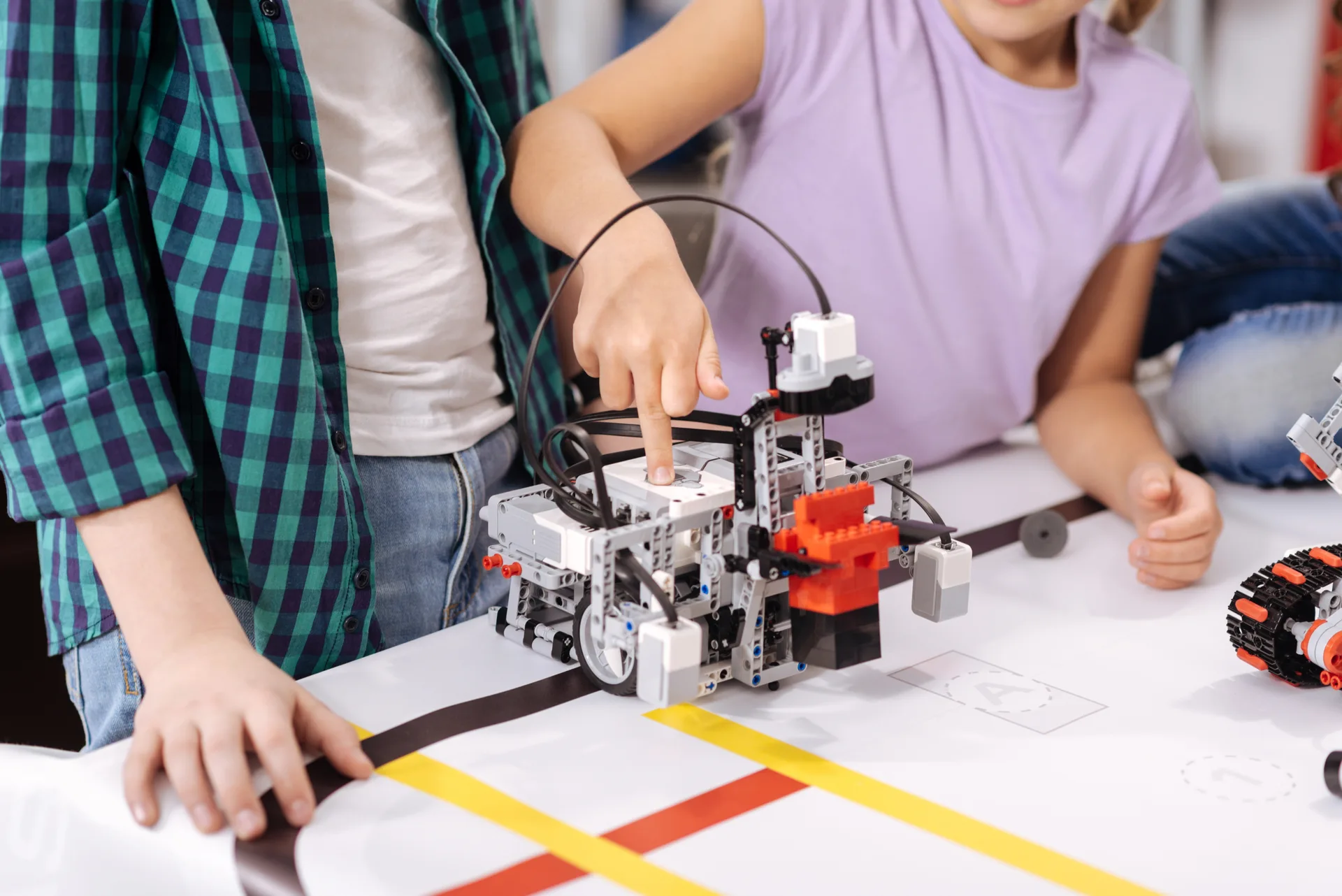
When a student pushes through the frustration, reworks the design, and finally gets it, we name the trait they just showed. We do not stop at good job. We say, that was persistence, you kept testing the gear alignment even when it was frustrating, and you solved it. That kind of specific praise ties their inner effort to the win in front of them, and it teaches them to welcome the next challenge instead of dreading it.
The Belt Path That Makes Growth Visible
To make character growth something students and parents can actually see, our robotics classes for kids use a Belt System inspired by martial arts. It runs across nine levels, from White Belt to Black Belt, tracking a student’s climb from curious Participant to confident Creator to emerging Leader. Every belt is an identity milestone. It names who the student is becoming, not just what they can build.
Our advancement standard is firm. A student who nails a technically flawless build but does not show the character traits we look for, like teamwork, self-control, or integrity, does not get promoted. We hold that line because technical skill without character is only half the picture. The Belt Promise and Belt Motto we repeat at the start of class keep that mindset front and center, reminding students of the values they are working to live out.
As students earn each belt, their role in the academy grows. A Yellow Belt is learning to belong and practicing the basics. A Green Belt is expected to own their projects fully and help their peers. By the time a student reaches Brown, Red, and Black Belt, the focus has shifted almost entirely to leadership, mentorship, and serving others, getting them ready to make a real mark on the world.
Shaping Passion Into Leadership
The whole point of our program is to guide students toward their own potential. As they master the building and coding inside our robotics classes for kids, they step into the Creator and Leader stages. Here they move past following instructions and start designing original solutions to hard problems, powered by their own curiosity.
We give students real stages to show that growth. At our Capstone Presentations, students present their own projects to a room of peers, instructors, and parents. They walk through their design process, name the engineering hurdles they cleared, and reflect on the character traits that carried them through. Watching a child stand tall in front of a room, explaining their choices and running a working robot, is the clearest proof of growth a parent can get.
Our Lab Tech Leadership Pathway takes it a step further. Advanced students step into mentor roles, assisting our coaches, guiding younger kids through tough builds, and modeling the behaviors at the heart of our character framework. That hands-on leadership builds their confidence and teaches a lasting truth. Real success is not measured by what you achieve alone, but by how well you lift the people around you.
Encouraging Young Creators at Home
Parents can grow this same mindset at home with a few simple moves from our coaching model.
- Focus on the process over the product: When your child shows you a finished project or drawing, praise the specific effort, focus, and persistence behind it rather than only the final result.
- Treat physical failure as a teacher: When a toy breaks or a home project goes sideways, bring your child into diagnosing the problem and fixing it together, so setbacks feel solvable.
- Ask guiding questions before giving answers: When your child hits a hard task or homework problem, hold back from solving it for them and ask what they think the next step should be.
- Offer touchable creation tools: Give your child chances to build, sculpt, or program real objects, balancing passive screen time with active, hands-on making.
When we shift the focus from technical mastery to human growth, we hand children the tools to meet a complicated world with confidence, resilience, and integrity. Our labs are full of the sounds of clicking bricks, whirring motors, and busy conversation. But the most important thing being built inside our walls is not a machine. We grow kids, not just coders.