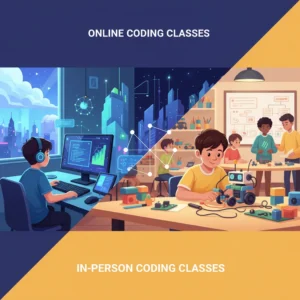

Most parents arrive at the choice between coding, robotics, and esports based on what their child already shows interest in. A child who loves video games gets steered toward esports. A child who builds things gets steered toward robotics. A child who spends time on computers gets steered toward coding.
That logic is reasonable. It is also incomplete. What each track develops in a child goes beyond the surface activity, and a parent who understands the developmental difference, not just the activity difference, is in a better position to make a decision that will last more than one season.
What Each Track Is Actually Developing
Coding develops logical thinking, abstract problem-solving, and the patience to work through problems that have no physical form. The challenge in a coding environment is entirely in the mind: holding a system’s behavior in working memory, identifying where the logic breaks down, and reconstructing it more accurately. The student who thrives in a coding environment is one who can tolerate working with the invisible and find satisfaction in making something abstract behave correctly.
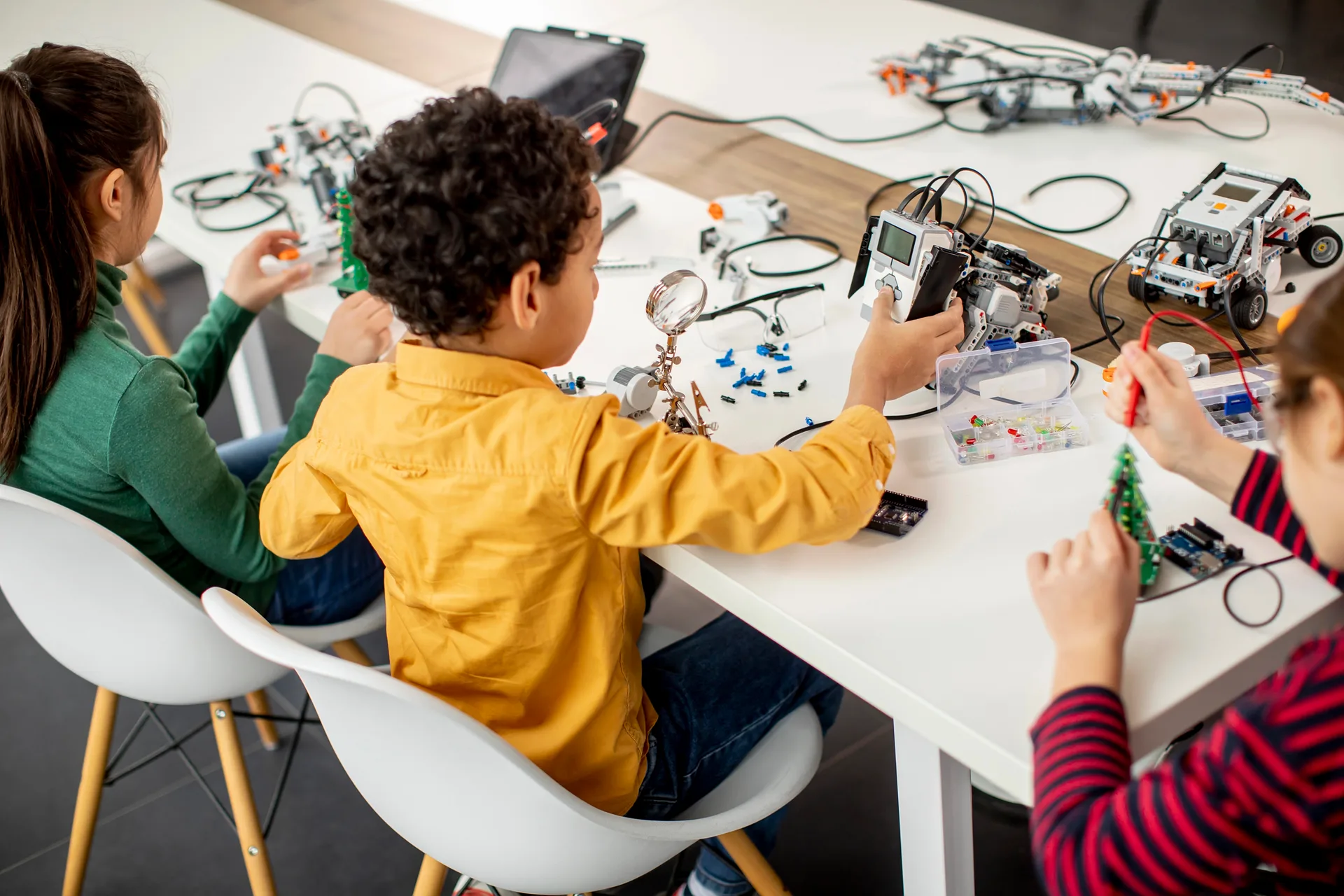
Robotics develops spatial reasoning, systems thinking, and the specific kind of teamwork that comes from working on a shared physical object toward a shared measurable outcome. The challenge in a robotics environment is at the intersection of physical and logical: the student has to understand both what the code is telling the robot to do and whether the physical assembly will allow it. The student who thrives in robotics is often one who wants to see the result move.
Esports develops real-time decision-making, emotional regulation under pressure, and the specific communication skills required to coordinate with a team while simultaneously executing a complex task. The challenge in an esports environment is primarily speed and composure: making the right decision quickly, communicating it clearly, and managing your own response when things go wrong. The student who thrives in esports is often one who is already socially and emotionally engaged, and who benefits from a structured environment for learning to direct that energy productively.
How to Match the Track to Your Child (Jordan)
The match question has three dimensions. First: what kind of problem does your child naturally approach? A child who takes things apart to see how they work is a different candidate than a child who writes stories with complex branching plots. Both can succeed in any track. But the initial engagement will be easier in the track that resembles the thinking they already do.
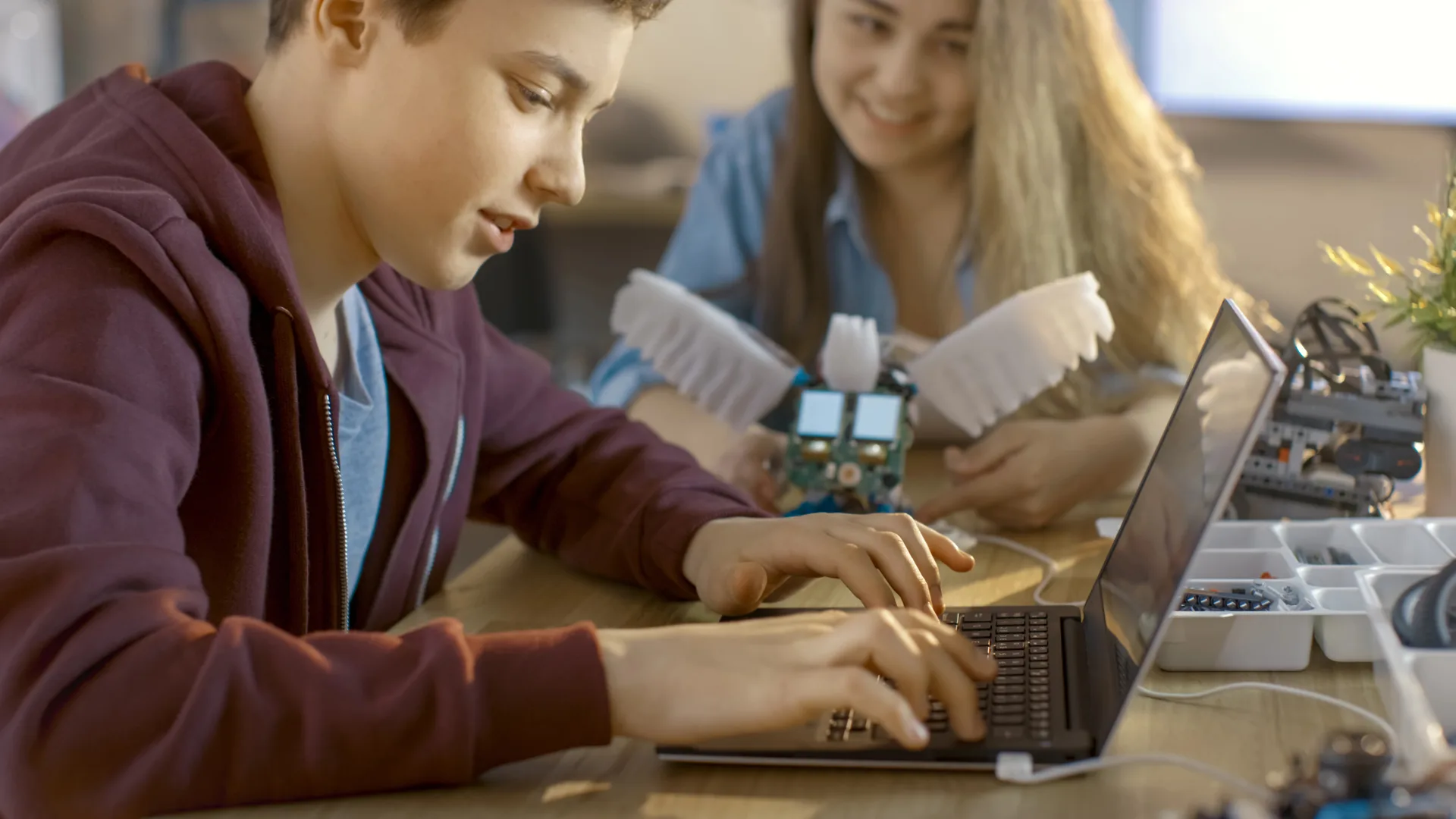
Second: what kind of feedback does your child need to stay engaged? A student who needs to see immediate physical results will often engage more readily with robotics than with pure coding. A student who prefers working at their own pace in a focused, individual flow state may find esports overstimulating and coding natural.
Third: what do you want the program to develop? If your primary goal is persistence and individual problem-solving, coding is the most direct path. If your primary goal is teamwork and systems thinking, robotics is the most direct path. If your primary goal is emotional regulation and real-time decision-making, esports is the most direct path. All three develop all of these things to some degree. But each has a primary development axis.
What LTCA Does That Most Programs Do Not
At Love to Code Academy, the three tracks are not separate programs. They are integrated into a single belt-based progression where students are exposed to all three over time. A student who starts in coding and discovers they love robotics has not wasted time. They have built the logical foundation that makes their robotics work more thoughtful. A student who starts in esports and moves into coding brings a communication and composure capacity that makes their coding collaboration more effective.
The integration means the initial track choice is less consequential than it might seem at other programs. There is no wrong door.
What Happens When Students Try More Than One Track
At LTCA, the curriculum is designed to introduce students to all three tracks over time. This is deliberate. The programs that produce the most well-rounded development are the ones where students have been exposed to the specific character demands of each environment rather than optimizing entirely in one direction.
A student who has spent time in coding develops strong individual problem-solving habits. A student who has spent time in robotics develops collaboration and spatial reasoning. A student who has spent time in esports develops real-time decision-making and emotional regulation. A student who has been in all three has a more complete character and thinking toolkit than any single track alone provides.
The practical implication for parents is that the initial track choice should not be treated as permanent. Starting with coding because a child seems logical-minded does not mean they should stay exclusively in coding if the robotics challenges turn out to be where their deepest engagement lives. The belt progression at LTCA accommodates and encourages movement across environments. The goal is not specialization at age eight. It is broad development that specializes later from a fuller foundation.
How to Have the Conversation With Your Child Before the First Session
Many parents find that asking their child directly which track they want to start with produces a useful conversation, not because the child’s answer is necessarily the right starting point, but because the reasoning behind the answer reveals something about how the child currently sees themselves in relation to technology.
A child who says “I want to do robotics because I like building things” is telling you about a strength they have identified. A child who says “I don’t want to do esports because I get too competitive” is telling you about a vulnerability they are aware of. Both answers are useful. The first might confirm a good starting choice. The second might argue for exactly the track the child is avoiding, since the esports environment, when well-coached, is one of the best available contexts for developing the self-regulation that competitive temperaments need.
The full program evaluation framework includes questions worth exploring with your child before the first session. A trial session in more than one track, when available, is often more useful than the pre-enrollment conversation alone.
What a Trial Session Can Tell You Before You Commit
A trial session in a track your child has not previously tried is one of the most informative steps available before committing to a program. Not because one session is definitive, but because it surfaces behavioral patterns that the enrollment conversation cannot.
Watch how your child responds the first time something does not work. That response tells you more than any expressed enthusiasm. Productive frustration looks like a child who is annoyed but continues trying. Disengagement, where the child stops engaging and looks around the room, signals that the environment has not yet given them enough of a foothold to make continuing feel worth it. Both responses are useful information. A child who disengages at the first difficulty in a coding session is not necessarily wrong for coding. They may need the more tactile feedback of a robotics session to build initial confidence before the coding environment becomes productive for them.
The full evaluation framework, including how to structure a trial session observation, is at How to Choose the Right Program. Ask about a trial session at Love to Code Academy →
For Liberty Families Making This Decision
Families from Liberty who are evaluating coding, robotics, and esports at Love to Code Academy at 248 NE Barry Road often find that starting with one track and allowing it to evolve is more useful than trying to make a permanent decision upfront.
The full framework for how to choose is at How to Choose the Right Coding, Robotics, or Esports Program for Your Child. A visit or trial session is the most useful next step. See program openings →