How Early Coding Builds the Skills Kids Carry for Life
Ten years ago, an eight-year-old named Maya walked into one of our rooms convinced she was not a “computer kid.” She was quiet, a little unsure, and happy to let other kids go first. Then she made a digital cat move across the screen with a few blocks she snapped together herself, and her whole posture changed. She sat up. She wanted to try the next thing. That small moment was the start of a ten-year arc, and it taught us something we now build every program around. Coding is not about memorizing commands. It gives kids a steadier way to think, more patience with hard problems, and the confidence to keep going when something does not work yet. The screen is just where it happens. The growth is in the child. That is the part that follows them into school, friendships, and whatever careers they choose later.
Where Clear Thinking Starts
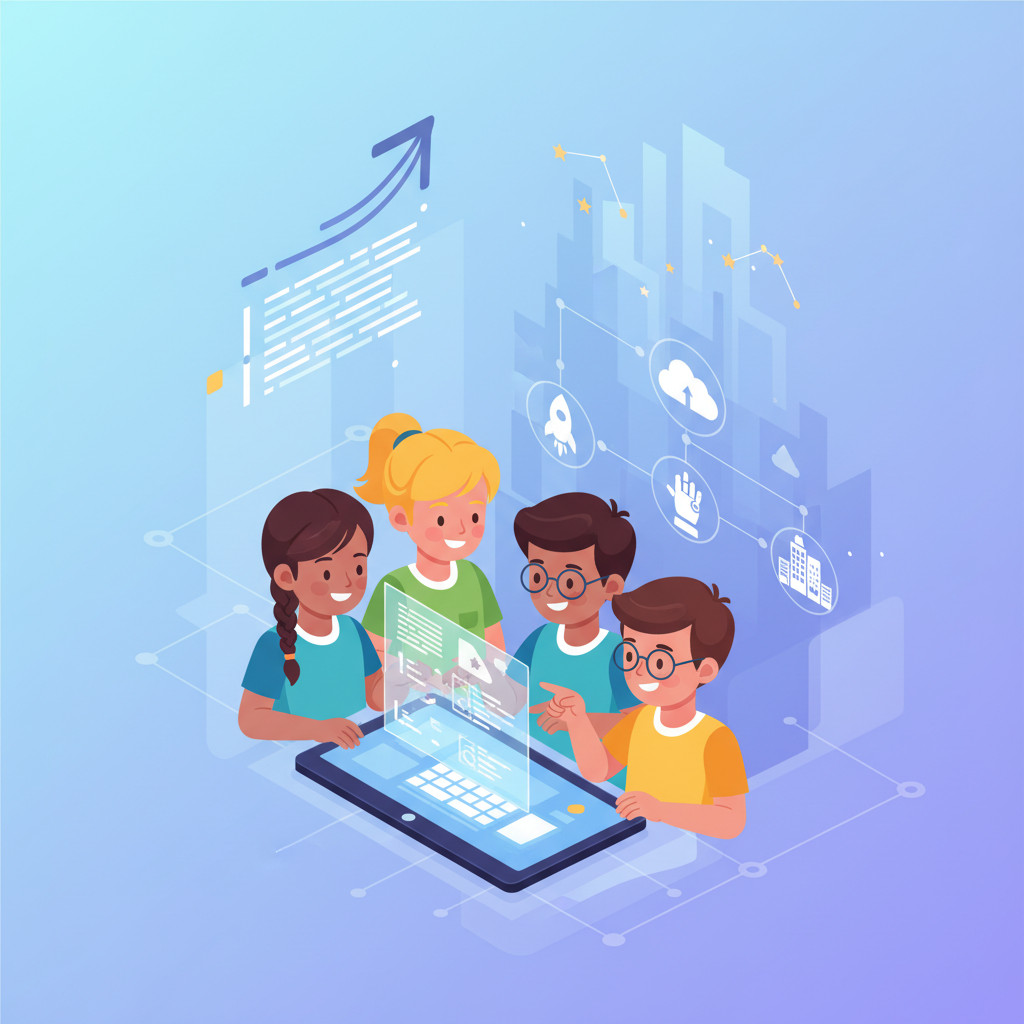
When kids first write code, they meet cause and effect in a form they can see. We do not hand young students dense lines of text. We start with colorful visual blocks that make logic something they can hold, move, and rearrange. That keeps the work playful and lets a child focus on how ideas connect. Dragging an if-then block is more than moving a shape on a screen. The child is laying out a decision, one step at a time, and watching what happens.
This is where imagination meets a real result. Picture a child building a simple game. To make a character jump and land safely, she has to work with a grid and a few number variables. Suddenly math is not a worksheet. It is the tool that makes her idea work. Kids pick up an instinct for how numbers and logic behave without ever being asked to memorize a thing. They learn by building. Over time it changes how they look at any big, messy problem, at the keyboard and away from it.
What We Have Watched Kids Do
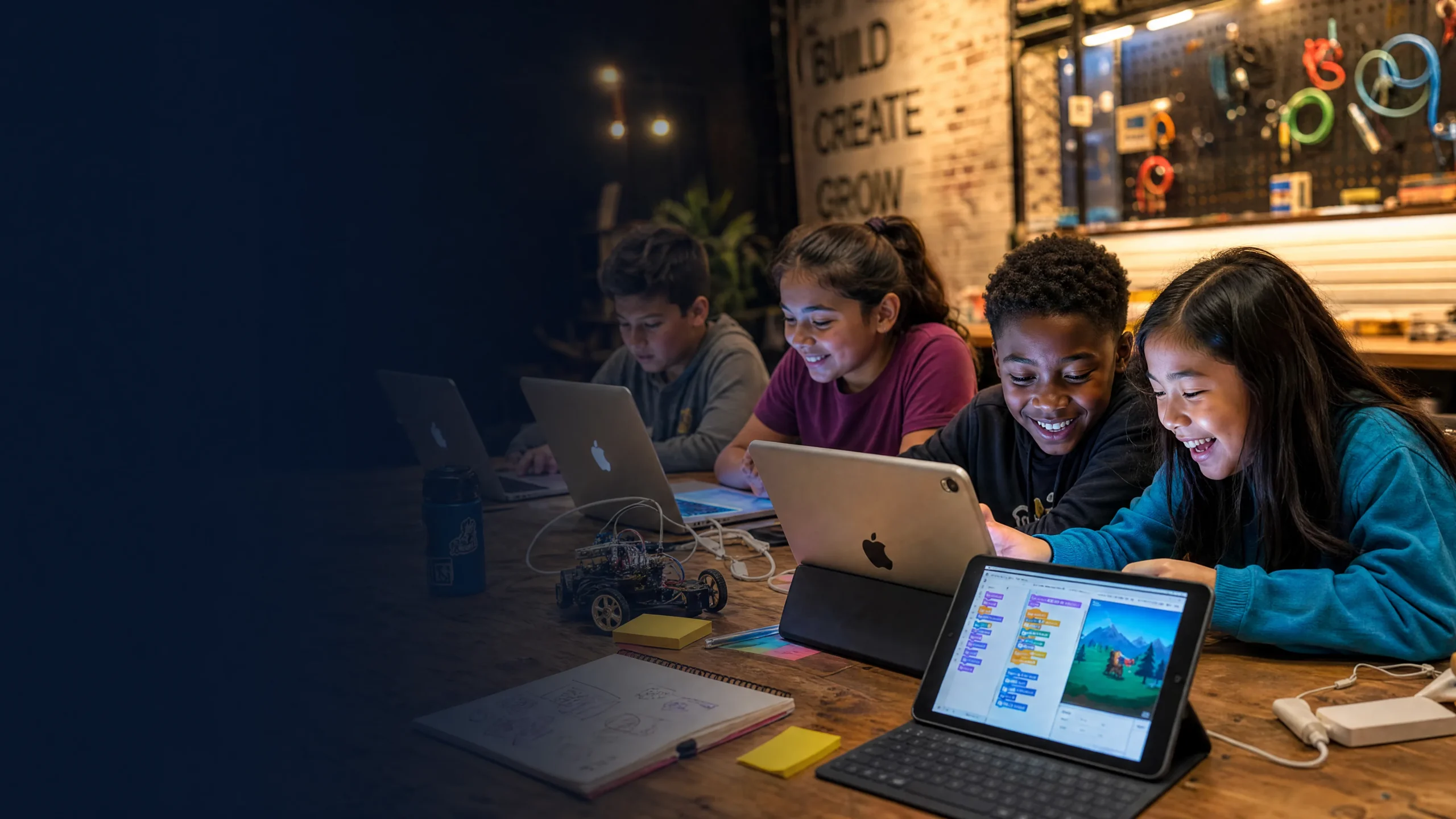
Childhood is a fast season of growth, which makes it a strong time to build thinking habits that last. We saw this the day our students had to guide a small robotic car through a winding maze. Maya’s car kept clipping the same left wall, run after run. She did not melt down and she did not quit. She stopped, looked, and broke the problem into pieces. She checked her sensor, counted her wheel turns, and traced the exact line of code sending the car wide.
Taking a big, frustrating problem and cutting it into small, doable steps is a skill that helps a child everywhere, in the classroom and long after. Programming does not tell kids what to think. It teaches them how to think. That habit builds a calm, steady mind, so a child can face a hard subject later with a plan instead of panic.
Skills That Hold Up Over Time
Work is changing quickly, shaped by automation and smart tools. The traits that hold their value are creative problem solving and clear thinking, and those are exactly what a young coder practices. Teaching kids to build software early gives them room to grow into that future instead of scrambling to catch up to it. This is a big part of why children should start coding well before a first job or a college class.
Typing is no longer a standout skill. It is the floor. The kids who thrive will be the ones who can direct a tool, adjust what it does, and make sense of what it tells them. A child who understands how software works can step into almost any field and bring that fluency along. A future farmer might read soil data with a short script. An artist might build a whole world in code. Early practice helps a child stay flexible and ready for a fast-moving world, whatever path they pick.
The Quiet Gift of Resilience
A lot of school teaches kids to fear mistakes. One bad grade can make a child cautious and slow to try. Coding turns that around. Here a mistake is just a bug, something to find and fix. Code rarely works on the first try, and that is completely normal. That simple fact teaches a child a deep lesson about staying with a problem.
We watched this with Maya again, older now, spending three weeks getting a multiplayer game to run. Each time it broke, she did not read it as failure. She read it as a clue. When it finally worked, her whole face lit up, and she had earned every bit of that. This is why the struggle matters. Kids learn that ability grows through effort, not luck. Instead of quitting when a task gets hard, they start to see a setback as one step closer. That steadiness carries into schoolwork, friendships, and daily life, giving them the patience to keep going.
A Simple Path for Young Creators
Helping a child learn to code works best as a gentle, step-by-step path. For five to seven year olds, the focus is simple logic and playful order. Tools like ScratchJr and Cubetto let small hands guide a toy or a character through basic steps without any typing. This early stage builds a feel for sequence and pattern and shows a child that coding is for everyone.
Around eight to eleven, kids can move into standard Scratch and hands-on kits like Lego SPIKE. Now they build games with moving parts, simple physics, and a scoreboard. A favorite is a virtual pet, where a child tracks hunger, happiness, and sleep. It shows how one action changes the whole program, which is a real taste of how software behaves.
By twelve, typing real code becomes the next adventure. Python fits well because it reads almost like plain English, which lowers frustration while teaching real structure. With a friendly editor like Thonny, kids can write scripts to handle small chores or build a text game. Moving slowly from blocks to typed code keeps a child’s confidence high as their skill stretches.
Bringing the Journey Together
With a clear path, a child can move from logic blocks to written code without ever feeling lost. The early years build thinking habits. The middle years add real hardware and game design. The later years bring typed code that opens the door to serious science and engineering. Each stage rests on the one before it, so the learning holds.
Learning to code is not one more subject to get through. It is a way for a child to build patience, clear thinking, and the courage to treat a problem as a puzzle worth solving. When we teach kids to code early, we are really giving them a steadier mind and the confidence to keep going when things are hard. That is the outcome we care about most. We grow kids, not just coders, and those are the kids who go on to build a brighter future.