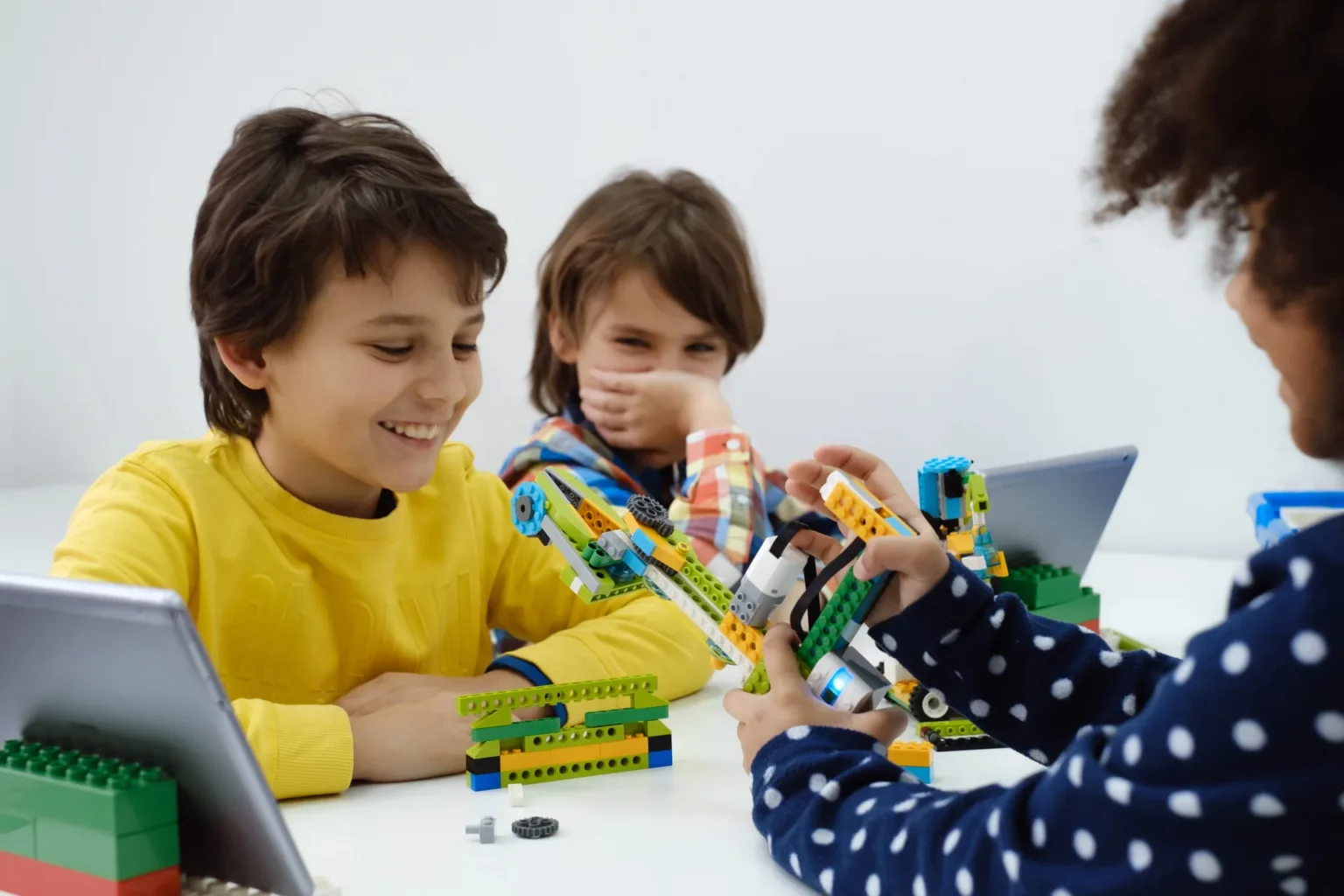
Parents of K-2 students sometimes ask whether their child is doing “real coding” in their sessions. When those students are working in Kodable, the honest answer is: yes, in the form that is most developmentally appropriate and most foundationally important for everything that comes after.
Kodable is a curriculum-aligned coding platform built specifically for early learners. It teaches sequencing, loops, conditionals, and functions through game-based problem-solving. A student working in Kodable is building a programming mental model, not playing a game with a coding theme. The distinction matters.
What Kodable Actually Is
Kodable presents students with a character, Fuzz, that needs to navigate a maze. The student’s job is to write the sequence of moves that gets Fuzz from start to finish. Early levels require simple directional sequences. Later levels introduce loops, conditional branching, and functions.
What makes Kodable appropriate for K-2 students is not that the concepts are simplified. The concepts are real: sequence, iteration, conditional logic. What is simplified is the input method. A five-year-old who cannot yet type confidently can still sequence a program by dragging movement commands into the correct order. The cognitive work, understanding that the program will execute exactly what is written in exactly the order it is written, is not simplified at all.
That cognitive work, building an accurate mental model of how a program executes, is the most important thing a beginning coder can develop. Syntax can be learned at any stage. The mental model, once formed, underlies everything.
What White Belt K-2 Students Work on in Kodable Sessions
At the white belt level in Kodable, students are working on three foundational concepts. First: sequencing, meaning writing instructions in the correct order and understanding that order matters. The same instructions in a different order produce a different result. That is a non-trivial concept for a five-year-old who has limited experience with systems that are strictly literal about order.
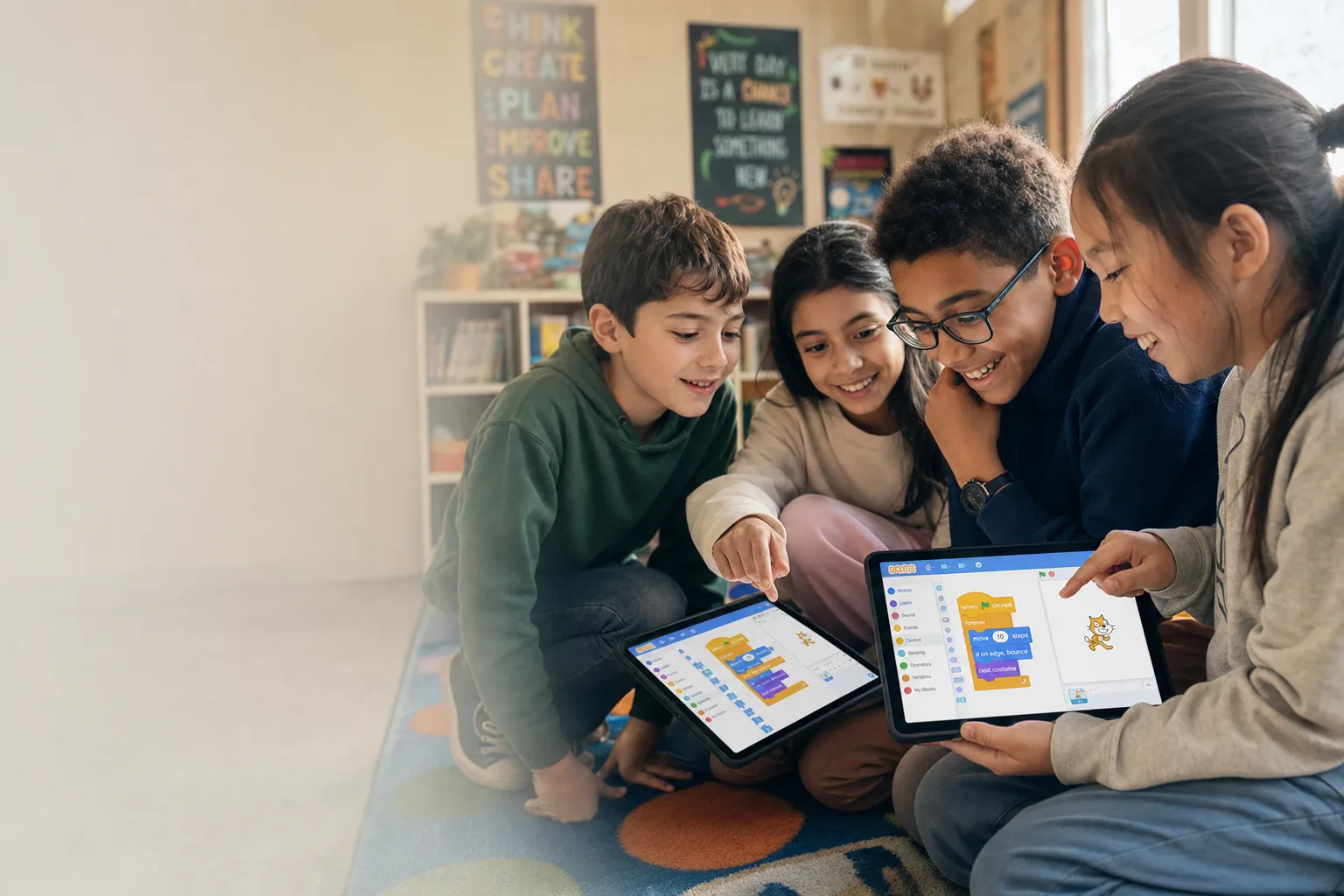
Second: cause-and-effect debugging. When Fuzz does not reach the finish line, the student has to identify which instruction was wrong, in which position, and why. At this age, this is often the first time a child has been required to trace a chain of events backward to find the source of a problem. The habit that forms here, working backward from an undesired result to its cause, is one of the most transferable thinking skills a young child can develop.
Third: loop recognition. When a student realizes that writing “move right, move right, move right, move right” four times could be replaced by “repeat: move right, 4 times,” they have understood iteration. For a six-year-old, this is a genuine conceptual breakthrough.
The Sequencing Foundation That Forms Here (Jordan)
Before a student can build anything in any programming environment, one cognitive skill has to be in place: the ability to decompose a goal into ordered steps and hold that sequence in working memory while executing it.
Kodable is specifically designed to build this skill. Every level presents a new goal. The student has to figure out, step by step, what instructions will achieve it. Before they drag a single block, the question is: what are you trying to do, and in what order does each step need to happen?
That pre-planning habit, thinking through the sequence before building it, is the same discipline that underlies every engineering process. A robotics student who can hold a multi-step assembly plan in mind before touching any components, a coder who can outline a program’s logic before writing any syntax, both of these begin in the same place: the K-2 student who has learned to think about what happens before Fuzz moves.
Why Younger Students Often Advance Faster Than Parents Expect
One of the most consistent surprises for parents of K-2 students in their first few months at LTCA is how quickly their child develops genuine problem-solving confidence. Parents who expected six months of basics before anything interesting happened often find that their child is narrating their own debugging process, describing what they tried and what worked, by the end of the second month.
The reason is structural. Kodable presents a series of challenges that escalate just past what the student currently knows. Each solved challenge is followed immediately by one that uses the same concept in a slightly harder context. The student does not have time to lose interest before the next version of the same thinking challenge appears.
That escalation structure, combined with the visual feedback of watching Fuzz complete the maze, produces a feedback loop that young students find genuinely compelling. They are not being entertained. They are solving something real, seeing the result, and wanting to solve the next harder version. That is the same internal state that engineers describe when they talk about the satisfaction of building something that works. It is happening in a five-year-old because the environment was designed to produce it.
How Kodable Connects to What Comes Next
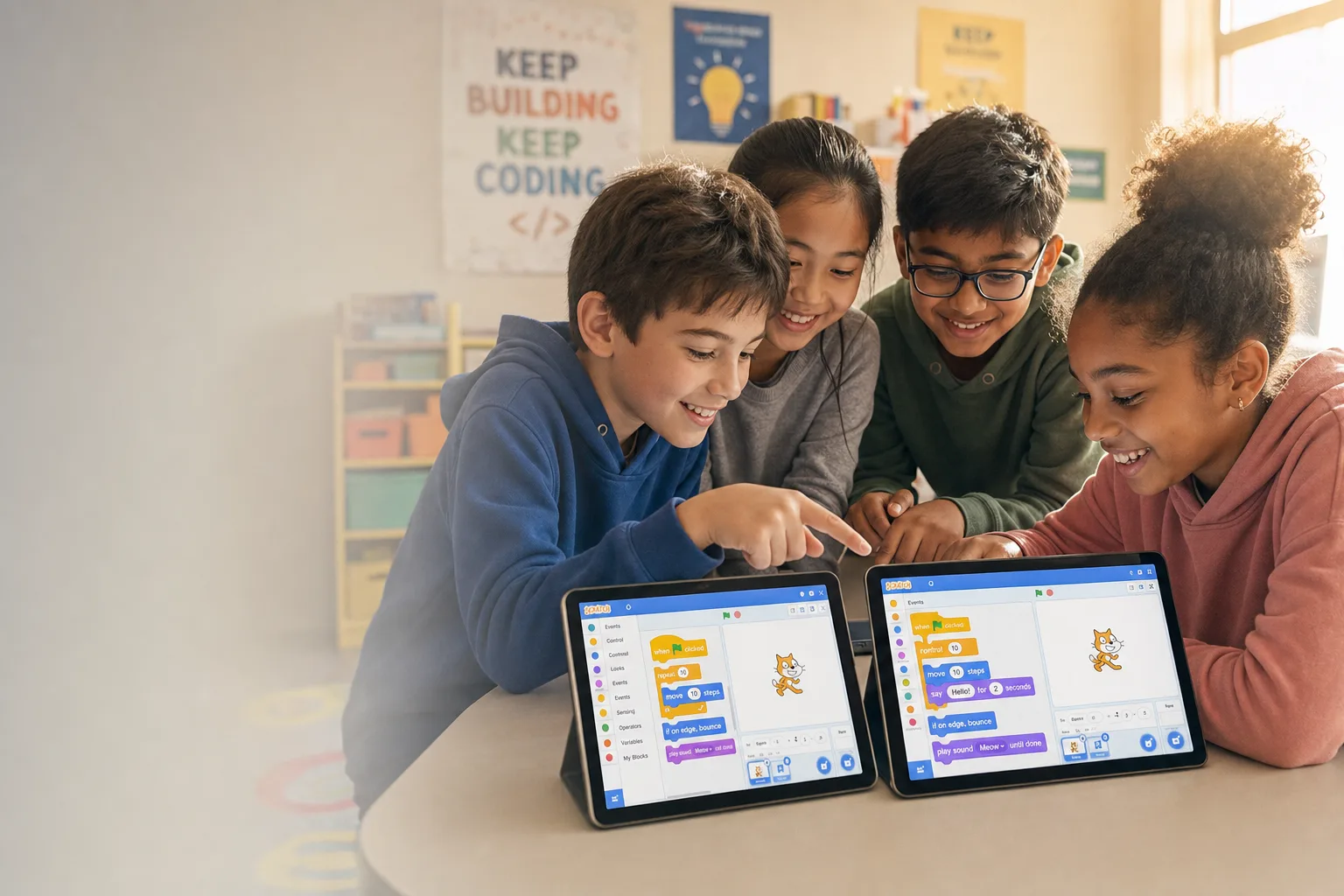
Every concept introduced in Kodable reappears in the platforms that follow. The sequencing mental model built in Kodable is the same mental model required in Scratch when a student needs to understand that the order of blocks determines the behavior of the program. The loop concept introduced in Kodable with the “repeat” mechanic is the same loop concept that appears in every text-based language a student will ever encounter.
A student who has deeply internalized these concepts in Kodable does not re-learn them in Scratch or in MakeCode. They recognize them. The new platform is new syntax and new interface. The thinking is already in place.
This is what a well-sequenced curriculum does: it builds the same conceptual foundations multiple times, in progressively more complex environments, so that the concepts are genuinely owned rather than temporarily acquired. The coding curriculum at LTCA is designed with this progression explicitly. Kodable is not the easy version of what comes later. It is the first time the student builds the foundation that everything later stands on.
What K-2 Students Take Home From Kodable
The most observable home behavior change in K-2 students enrolled in a Kodable-based coding program is the narration habit. Within two or three months, many parents notice their child beginning to describe what they are trying to do before they do it, in play, in building activities, sometimes in homework. “First I do this, then this, then this.” That is the sequencing habit made verbal.
It is also visible in how they handle small errors outside the coding session. A child who has spent months in an environment where error identification is a normal, low-stakes part of the process starts applying the same orientation to other mistakes. The spilled cup is not a catastrophe. It is something that happened. You clean it up. You try again.
Those behavioral shifts are what a coding program for K-2 students is actually for. The platform is Kodable. The product is a child who sequences, who debugs, and who understands that a mistake is a step in a process rather than a verdict on their ability.
For Smithville Families With Young Children
Families from Smithville who have children in kindergarten through second grade and are wondering whether their child is old enough for a technology program have the right question. The answer at LTCA is: yes, and Kodable is specifically designed for this age.
The coding program at Love to Code Academy at 248 NE Barry Road uses Kodable as the primary platform for K-2 students at white and yellow belt, not as a placeholder until they are “ready” for real programming, but as the genuine foundation on which all later technical skill is built. See the full session experience at Inside Love to Code Academy.