Minecraft is one of the most misread platforms in youth education. Parents who hear it mentioned in a curriculum context often have one of two reactions: either they assume their child is just playing, or they assume the program is not serious enough to use a game as an educational tool.
Both reactions miss what Minecraft Education Edition actually is. It is a different product from the consumer version, built specifically for structured educational environments, with curriculum-aligned challenges, collaborative building constraints, and a coding layer that connects visual programming to in-game outcomes. What happens in an LTCA Minecraft Education session is closer to engineering than to gaming.
What Minecraft Education Edition Actually Is
Minecraft Education Edition is a version of Minecraft developed by Microsoft specifically for classroom and structured learning environments. It includes features the consumer version does not: teacher controls over the world and permissions, pre-built curriculum lessons aligned to learning objectives, a coding interface called Code Builder that connects Microsoft MakeCode and Python to in-game objects, and structured collaborative project modes.
What students are doing in a Minecraft Education session at LTCA is not open-ended sandbox play. They are working on defined challenges with specific technical and design requirements. Build a structure that meets these constraints. Automate this process using Code Builder. Design a solution to this problem that your partner can interact with and extend.
The game engine is familiar to most students, which removes the interface learning curve and lets them focus on the actual challenge. The challenge is the curriculum. The Minecraft environment is the vehicle.
What Students Actually Do in a Minecraft Education Session at LTCA
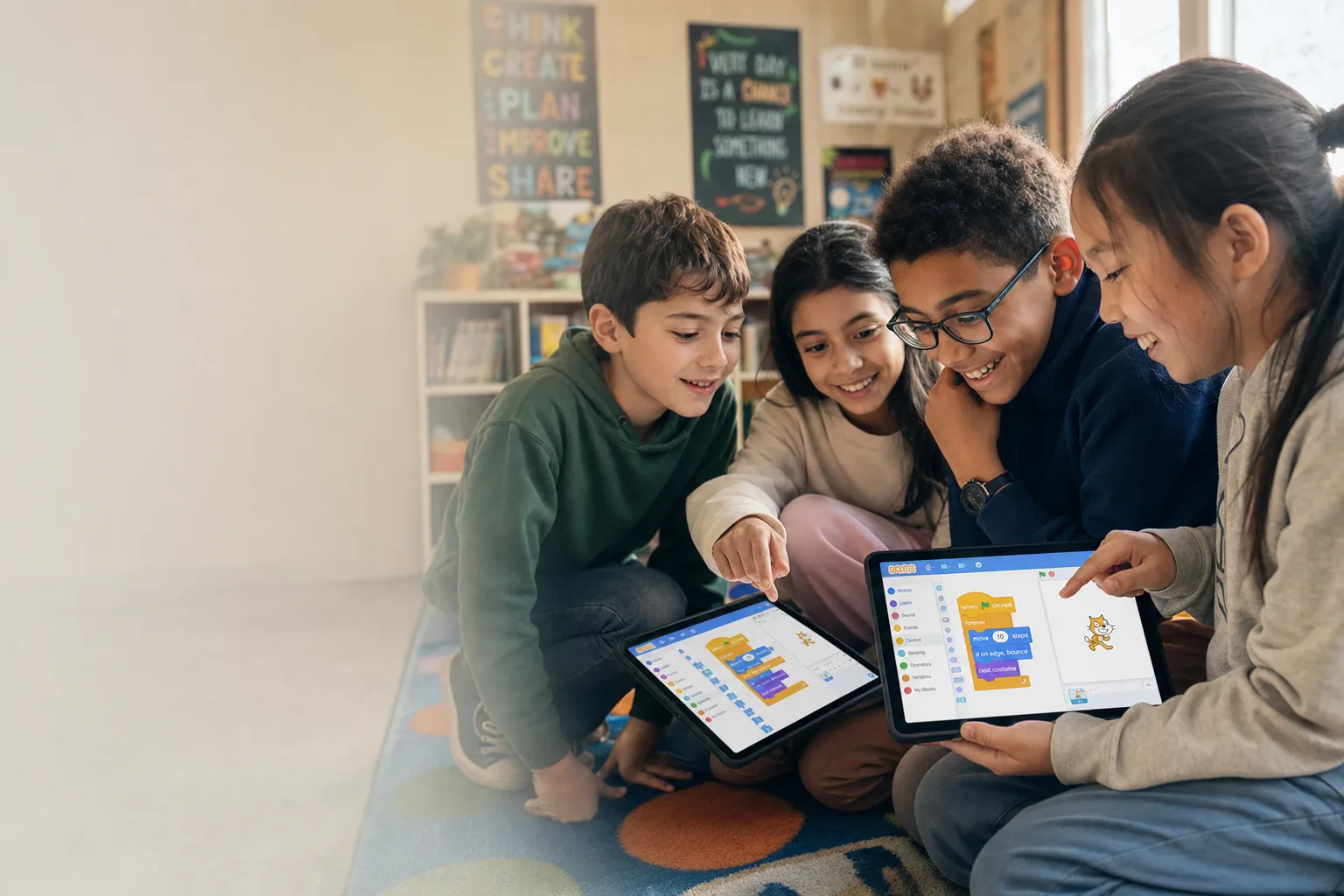
At the belt levels where Minecraft Education is used at LTCA, sessions are structured around collaborative design challenges. Two or more students receive a shared problem: build a functional structure with defined parameters, or automate a process using the coding interface, or design a system that demonstrates a specific logical concept.
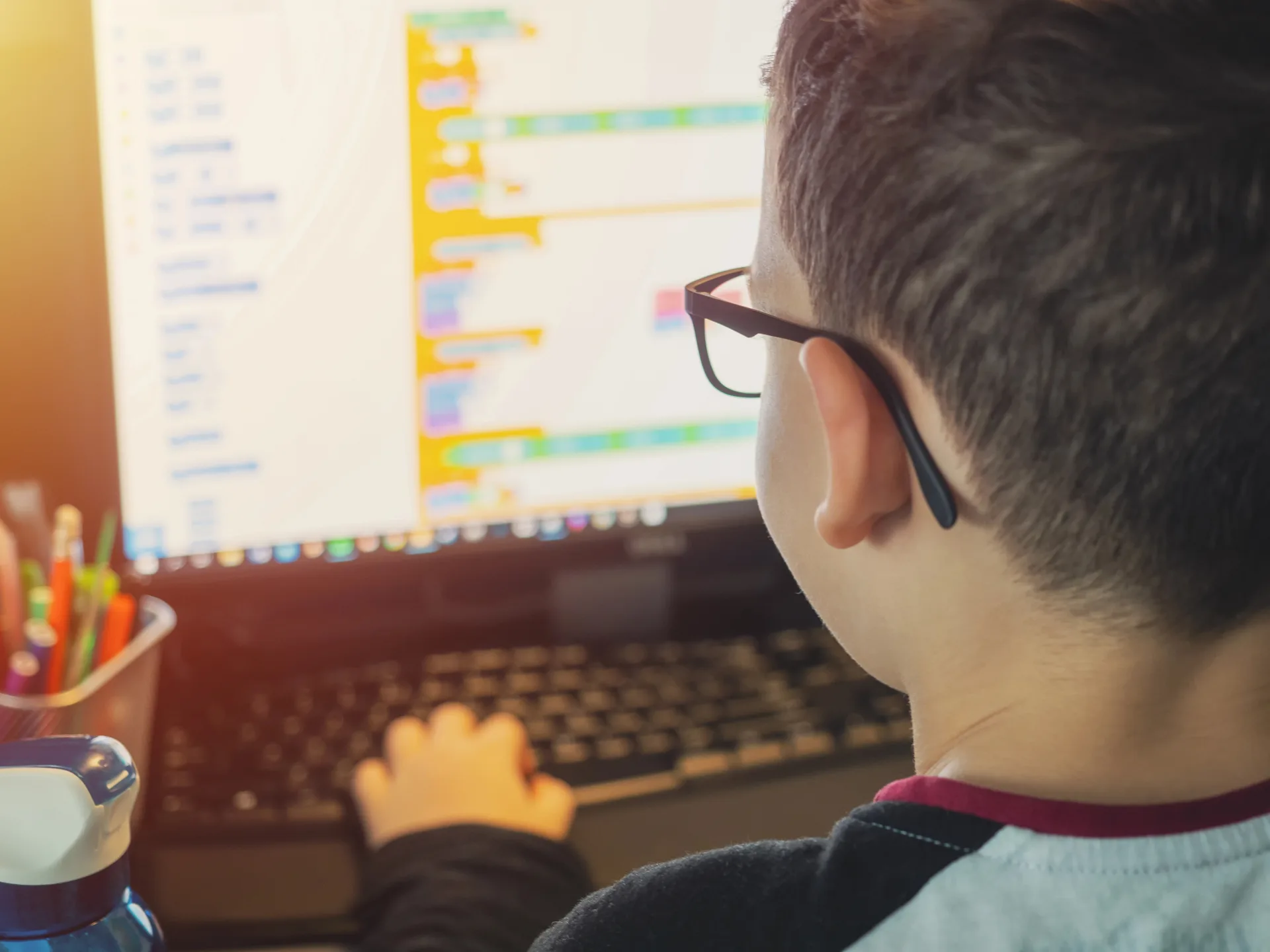
The coding integration is where the depth is. Code Builder connects block-based programming, using the same MakeCode interface used outside of Minecraft, to in-game agents and objects. A student who codes an agent to place blocks in a specific pattern is writing a real loop with real parameters. The visual feedback, watching the agent execute the code in the game world, makes the connection between code and outcome immediate and tangible in a way that a traditional screen-based exercise does not.
Students who have worked in Minecraft Education describe the moment when their code makes something happen in the game world as one of the clearest examples of understanding what programming actually does. The abstraction becomes concrete. The code is not just text. It is a set of instructions that produced a real, visible result.
The Design Thinking That Emerges From Collaborative Builds (Jordan)
Before two students can successfully complete a collaborative Minecraft Education challenge, three questions need to be answered. What are we building? Who is responsible for which part? How do the parts connect?
Those questions are the design phase of any engineering project. Most students skip it the first time and start building immediately, which typically results in two students building in the same space with no coordination and a structure that does not fit together. By the third or fourth collaborative session, they have learned, through experience, that the design phase is not optional.
What develops through this experience is a practice that professional engineers call interface design: the discipline of specifying, before building, how your component will connect to the components others are building. It is one of the most difficult and most important skills in collaborative technical work. Minecraft Education teaches it not through instruction but through the concrete experience of building without it and seeing what happens.
What Minecraft Education Does That Scratch and MakeCode Do Not
The platform progression at LTCA is designed so that each tool develops something specific and partially different from the others. Scratch develops individual logical thinking in a visual programming environment. MakeCode develops physical computing and the design-build-test cycle. Minecraft Education develops something that neither of those platforms emphasizes as strongly: the practice of building something that someone else will inhabit and use.
When a student builds a structure in Minecraft Education that their partner has to navigate, they are designing for another person’s experience. That design constraint, the awareness that someone else will interact with what you built and that their experience matters, is fundamentally different from building something that only you will use. It is one of the earliest introductions to what designers and architects and product developers do professionally: build for someone who is not you.
This shifts the student’s evaluation criteria. Instead of “does this work the way I intended?” the question becomes “does this work for the person who is going to use it?” That is a more complex question, and it produces a more complex kind of thinking.
What Students Say About Minecraft Education After the Fact
Students who have worked through Minecraft Education sessions at LTCA and moved on to more advanced platforms often describe the Minecraft Education experience as the one where they first understood what it felt like to build something that surprised them, where the combination of their own design decisions and the game’s simulation produced results they did not fully predict.
That experience of building a system that behaves with more complexity than expected is one of the most important realizations available to a young programmer. Most systems, at some threshold of complexity, produce emergent behavior: behavior that arises from the interaction of components rather than from any individual component. Minecraft Education, with its physics simulation and multi-agent capabilities, allows students to encounter this phenomenon earlier than most coding environments permit.
A student who has watched a structure they built interact with environmental factors in unexpected ways has begun to develop a systems-thinking mindset. They understand, in a concrete and embodied way, that a system is not just the sum of its components. That understanding transfers. See the full platform progression at Inside Love to Code Academy.
What Families Ask Most Often About Minecraft Education
The most common question families have is whether their child will be playing the regular consumer version of Minecraft. The answer is that Minecraft Education Edition is a different product, with structured curriculum challenges, controlled collaborative environments, and a coding integration layer that the consumer version does not include.
The second most common question is whether a child who is already skilled at the consumer version will be bored. Consistently, the answer is no: the structured challenges require planning, collaborative design, and coding integration that open-ended sandbox play does not prepare students for. A child who is expert at building freely discovers quickly that building under a specification, for a partner, using the Code Builder, is a different and harder challenge than what they already know.
That discovery is often where the most productive development begins for the most experienced students. The expertise they arrived with becomes a foundation rather than a shortcut. The after-school program uses this as a deliberate design feature: students who arrive most confident are given the hardest design constraints. The challenge scales. The development continues.
For Parkville Families Asking About the Curriculum
Families from Parkville who are asking what their child will actually be working on in sessions at Love to Code Academy at 248 NE Barry Road sometimes express concern when they hear Minecraft mentioned. The concern is understandable and the reassurance is specific: the sessions that use Minecraft Education Edition are structured engineering and coding challenges, not unstructured play.
The after-school program uses Minecraft Education as one platform in a progression of tools, each chosen for what it develops best at specific belt levels. See the full session experience at Inside Love to Code Academy.