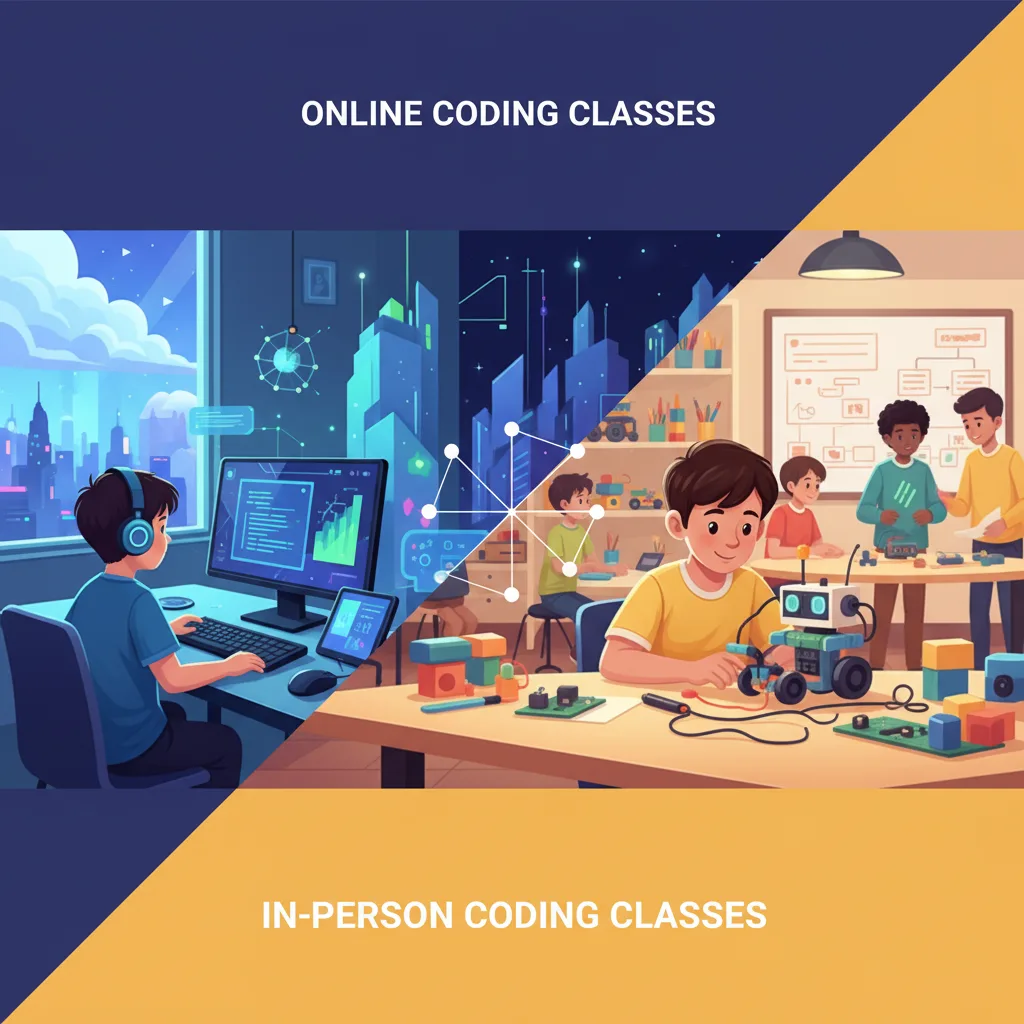
Online Coding Classes for Kids vs. In-Person: Choosing the Right Path
The first time ten-year-old Noah made gravity bend inside his favorite game, he turned around with a grin that said more than any report card ever could. He had written the Python himself, and it worked. That look is the whole point. Coding is the environment. What grows is the kid. If you are a parent weighing online coding classes for kids against a drive across town, you are really asking a bigger question. Where will my child build focus, confidence, and the willingness to try again after something breaks? It is a real challenge to strike a balance between old-school brick-and-mortar classrooms and screen-based learning. Here is an honest, warm look at virtual coding camps, neighborhood computer schools, and live online classrooms, so you can find the fit that helps your child grow.
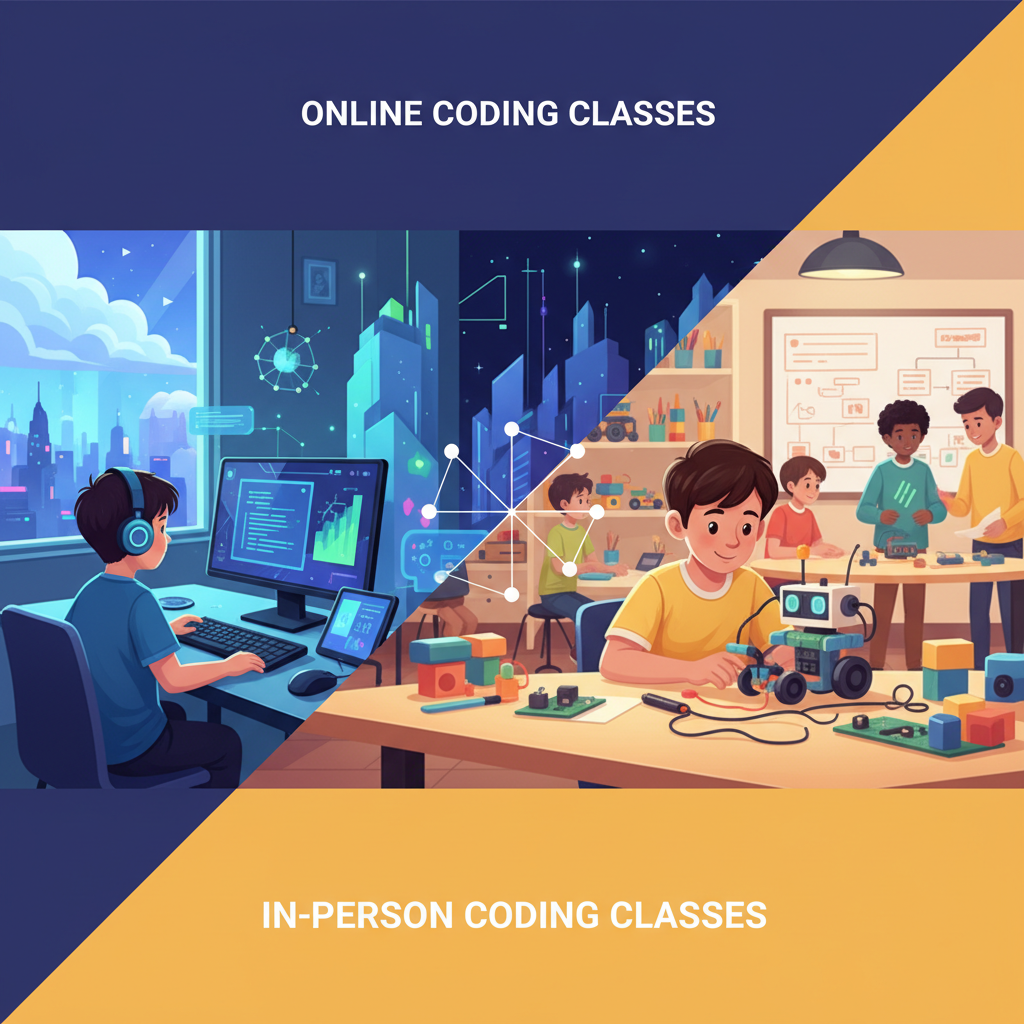
It started when Noah announced he wanted to build games, not just play them. Like a lot of families, we felt pulled two ways. Set up a laptop at the dining table, or drive to a lab downtown. Both promised logic, problem-solving, and clean code. But the day-to-day feel of each was very different. So we paid attention to what mattered most. His focus, his mood, and whether he kept showing up ready to try. What we learned made the strengths of each path clear.
Why We Tried Home-Based Coding for Noah
Our first lesson was simple. Online coding classes for kids can bend to fit how a child actually learns. School days drain a young social battery fast. Asking a tired kid to load back into the car for one more stop is a hard sell. When Noah got home at three, settling in at his own desk let him decompress while staying mentally engaged. Logging into a safe classroom at four meant no traffic, no parking, and a calmer start.

Home also meant a machine that was truly his. Unlike shared computers at a public center, his setup saved every file the second he made it. His game art stayed put. He could pick up right where he left off. That steadiness gave him room to take risks with tricky ideas like nested loops and conditional logic, because a familiar, quiet room made the hard parts feel less scary. Comfort did not make him soft. It made him brave enough to experiment.
The Real-World Pull of Neighborhood Coding Hubs
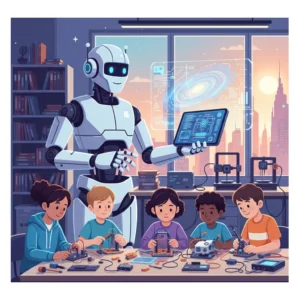
Even with all that ease, a local coding space carries an energy a screen struggles to match. Walk into a room with dual monitors, clicky keyboards, and a 3D printer humming in the corner, and a kid knows something real is happening here. Sitting side by side with other kids sparks quick teamwork and genuine friendships. That belonging is the quiet engine behind persistence and sportsmanship.
When a bug froze Noah’s program in a room full of peers, a coach could lean over, spot the typo, and get him unstuck in seconds. That fast, in-person help kept frustration low and momentum high. Physical spaces also shine for hands-on work, like programming a robot to roll through a cardboard maze on the floor. Some kids thrive on touch and need real walls around them to stay locked in. For those kids, the rhythm of a local academy offers routine, structure, and a place to belong.
How Online Lessons Became Genuinely Active
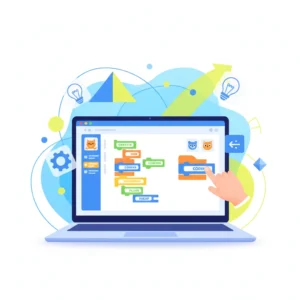
The further we went, the clearer it got. Good online learning is nothing like watching recorded videos alone. The strong programs use live screen sharing, shared code editors like Replit, and instant whiteboards to keep kids leaning in. During a two-week virtual camp, Noah worked with coaches whose day jobs were in tech. That kind of guidance is hard to find in smaller towns, where local clubs often cannot hire expert coders.
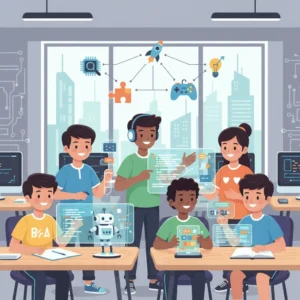
These classrooms add friendly challenge points, real-time error hints, and chat spaces watched over by certified coaches. Noah built games in Roblox using Lua while his coach, miles away, circled broken code on his screen as it happened. That live connection keeps kids in the driver’s seat instead of drifting into spectators. Because the class travels, he never missed a session when we visited family out of state. His momentum held. Solving a puzzle earned him a badge, and that small win fueled the next attempt. Best of all, he worked with five other kids across the country, sharing his screen to explain how he fixed a stubborn loop. He was building confidence and his voice right alongside his code.
Timing the Lessons to Match Young Brains
A class only works if it respects how long a child can truly focus. In-person schools often run on long, fixed blocks, sometimes ninety minutes at a stretch. That is a lot for a young mind. Most kids hit their limit around forty-five minutes of deep thinking. Push past two hours and the final stretch is mostly fatigue.
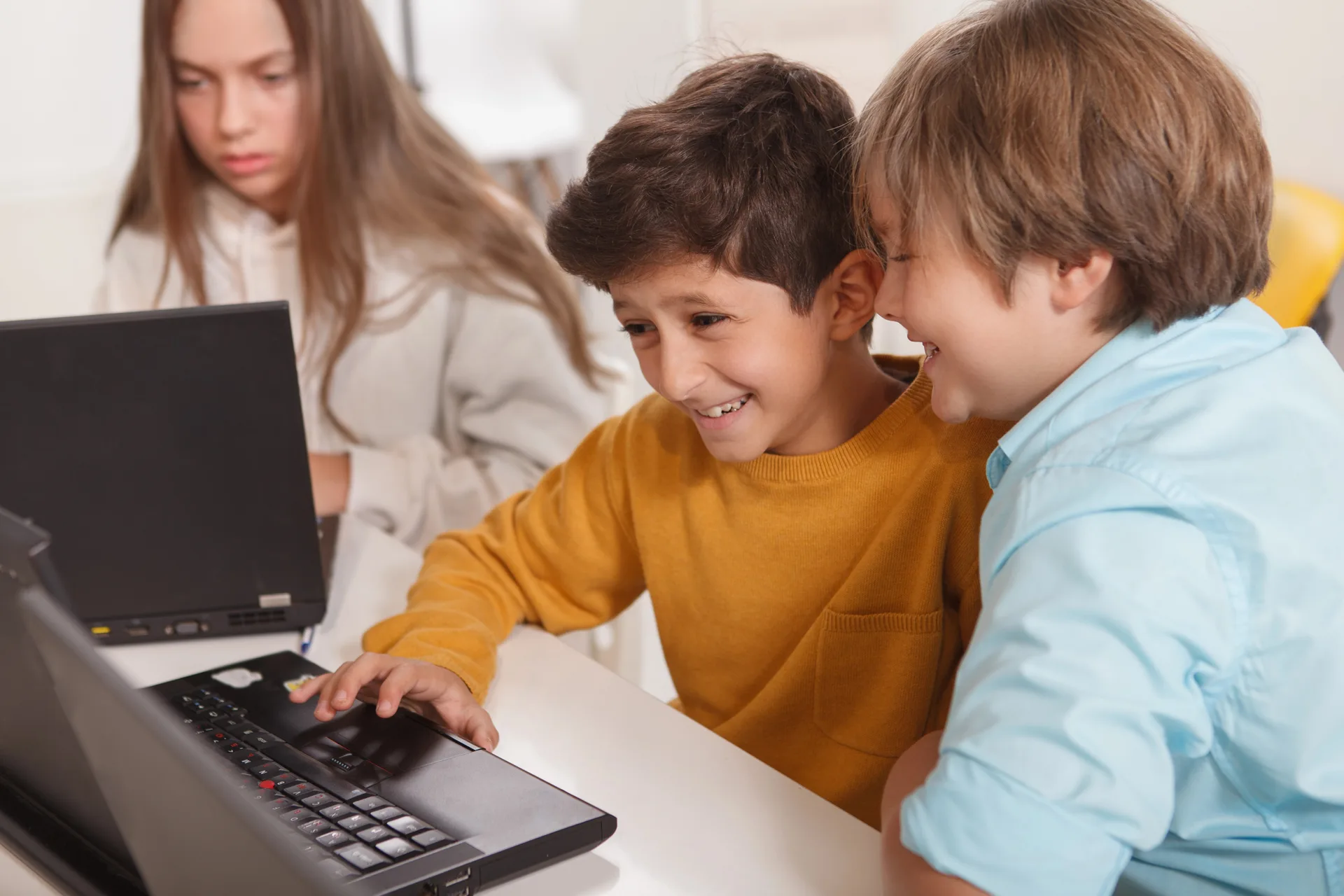
Live online sessions tend to run in tighter, fifty-minute blocks, which fits the way kids actually learn. Research on the spacing effect is clear. Short, frequent practice sticks far better than one long marathon. Two short sessions a week helped Noah hold onto code concepts better than a single weekend cram ever did. Learning from home also let us choose the hours when his brain was sharpest, rather than settling for whatever slot was left at the local center.
The Real Cost of Driving vs. Clicking
Time and money always shape the decision. Physical schools carry real overhead. Rent, equipment repairs, power, and insurance all land in the tuition, often pushing local classes to forty or eighty dollars an hour. Then come the quieter costs. Gas, wear on the car, and the hours a parent spends waiting in a lobby chair.
Online classes usually come in friendlier, because there is no building to pay for. Quality live group classes often run between fifteen and forty dollars an hour, which stretches the same budget into more learning. Skipping the drive gave our family back about twelve hours a month. We spent them on dinners together, time outside, and simply resting. For a busy household, that reclaimed time is not a small perk. It is a real gift.
Which Path Fits Your Child
The choice comes down to your child and your family’s daily flow. Some kids need a coach nearby, struggle to sit still, or simply light up around real-life friends. Those kids often thrive in a physical classroom, where the structure and face-to-face energy help them stay engaged while building bonds.
Self-starters, kids chasing a specific skill, and families far from a big city will find real value online. They can learn from strong coaches, reach ambitious topics like game design, and do it all from the living room. Look closely at how your child learns, then try a class in each style. You will see quickly which one lights them up.
Deciding on the Right Coding Classes
- Watch their focus span. For younger kids, choose shorter, lively online sessions that match their attention and keep learning fresh.
- Weigh the drive time. Count the hours and dollars you save when an online class removes the commute and trims the hourly fee.
- Honor their social needs. Choose a local school when your child needs real-life friends and over-the-shoulder coaching to stay on track.
- Seek out strong coaches. Use online options to reach great teachers and languages like Python or Java that nearby schools may not offer.
Finding the right path is a little trial and error, and it shifts as your child grows. Keep it warm, keep it consistent, and keep the focus on the kid rather than the code. Do that, and you are not just raising a coder. You are raising a confident, capable child ready for whatever comes next.