From Blocks to Real Code: Helping Older Kids Grow Into Written Python
There is a moment every parent hopes for. Your child stops being satisfied by what a program can do and starts wondering what they can make it do. At Love to Code Academy, we see it often. A student finishes a complex Scratch game, sits back, and for the first time does not ask what to build next. They have outgrown the colorful drag-and-drop tiles. They are ready for something that pushes them harder. That readiness is exactly when we introduce written code. Bringing python for kids into their world at this point opens a clear path from playful logic to real software building. And the growth that comes with it goes well beyond typing. It is a steady lesson in patience, focus, and the quiet confidence that comes from solving hard things.
The Leap From Snapping Blocks to Typing Code
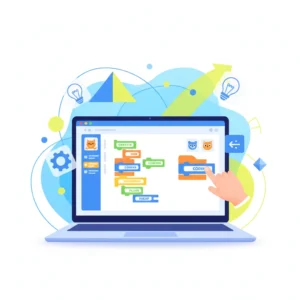
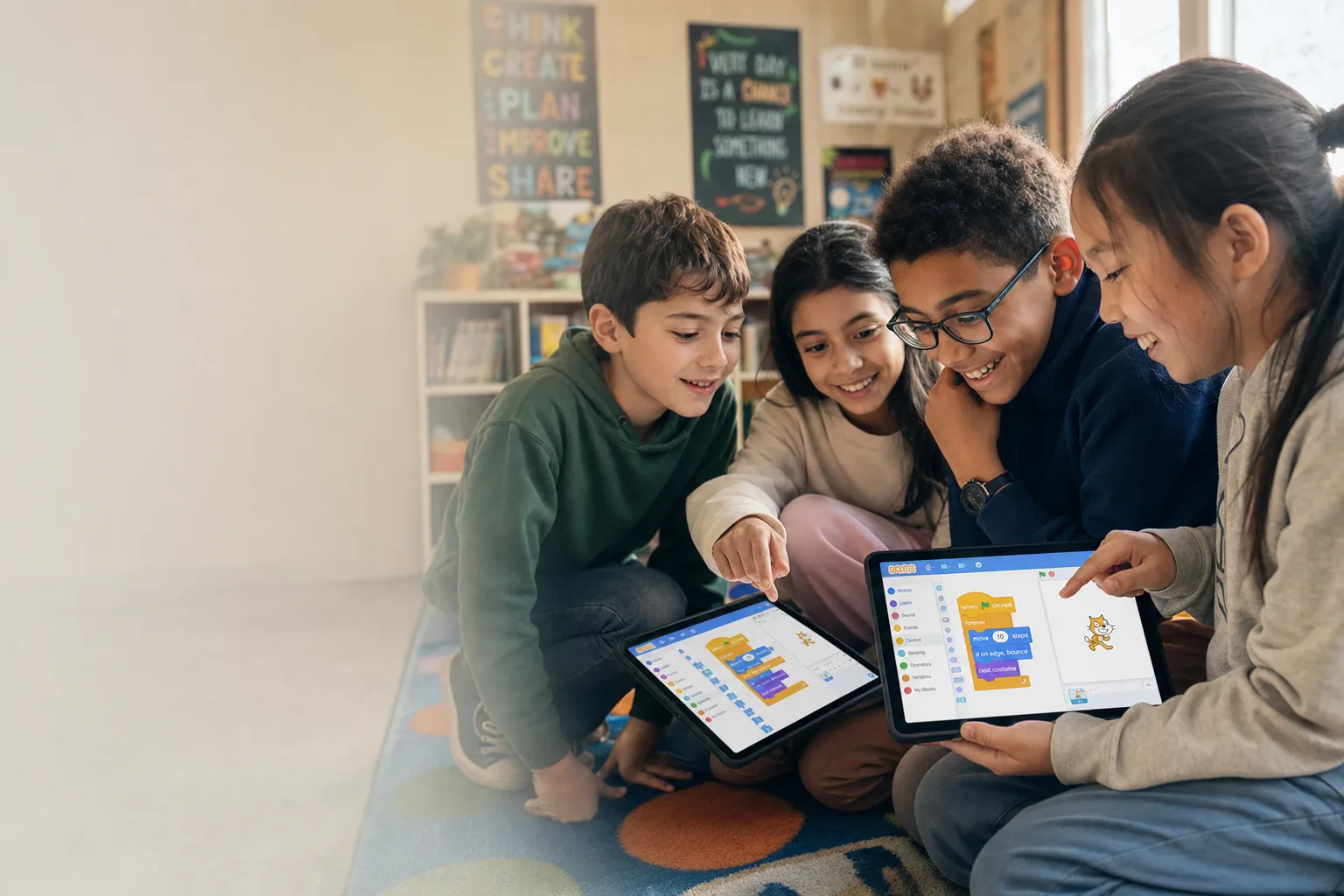
Drag-and-drop coding is a wonderful place to start. It lets young kids play with loops and logic without worrying about a misplaced comma, and for a seven-year-old that freedom is everything. But older kids eventually feel the ceiling. The colorful tiles start to feel small, and dragging blocks begins to feel like a game they have already beaten. Moving to written text is a real jump. It removes the safety nets and introduces kids to how professional software actually works. Here they learn a simple, honest truth. Computers do not guess. They do exactly what you tell them, right down to the last character.
Take Jayden. He spent two years with us mastering block-based robotics and building detailed games. He earned his Green Belt through steady effort and a genuinely helpful spirit, and he was hungry for more. His first day typing real lines of code was equal parts excitement and surprise. With blocks, his projects almost always ran, even when a character spun the wrong way. His very first Python script stopped cold. The reason was a single missing parenthesis. Jayden looked at the error message on his screen. It was his first real meeting with syntax, the kind of precision that blocks had always handled for him.
That hurdle is quietly one of the most valuable moments in a child’s growth. When code breaks, kids cannot mash buttons until it works. They have to slow down, look carefully, and read their own work line by line. They learn to own their mistakes. Our coaches hold back from grabbing the keyboard and fixing the typo. Instead, we use our coaching conversations to help students find the slip themselves. Little by little, kids stop seeing error messages as failures. They start seeing them as signposts pointing the way to a program that works.
Why Python Fits Growing Minds So Well
Choosing a first written language matters more than most parents realize. Some languages ask kids to type pages of setup before a single word appears on the screen. That is exhausting, and it drains the joy before it has a chance to build. This is why python for kids is such a strong first step. Its structure is clean and reads a lot like plain English. Because the language feels natural, kids can focus on how a program thinks instead of memorizing a maze of brackets and symbols.
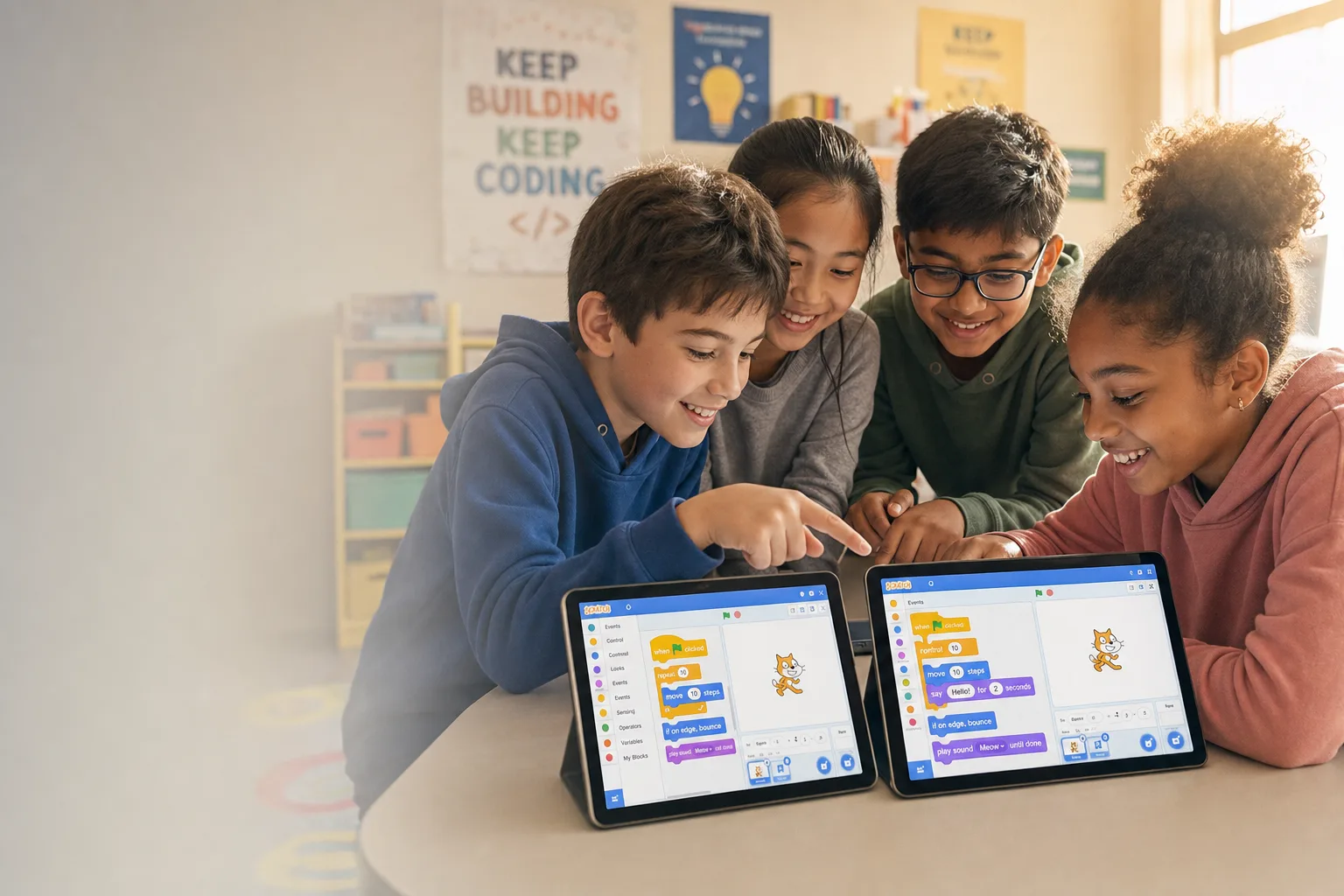
The difference is easy to see. To print a simple greeting, some languages demand class files, main methods, and layered system calls. Python asks for one line. That directness keeps the creative spark alive. In their first week, kids can build text adventures, math models, and simple games. They keep their momentum while they get used to the slower, more careful rhythm of typing.
Python offers another quiet gift. It rewards neatness. In many languages, spacing your code well is only a suggestion. Python makes it a rule. If lines are not lined up correctly, the program will not run. That design teaches order and self-discipline without a lecture. Kids learn firsthand that structure is not about looking tidy. It is about making things actually work.
Learning That Small Details Carry Weight
At Love to Code Academy, the screen is only the setting. The real work is building character. Teaching python for kids gives us a natural place to grow personal responsibility. Blocks are forgiving. They refuse to snap together when they do not fit. Written code takes those guardrails away and hands the outcome of a project fully to the student.
Once kids start typing, they discover how literal a computer really is. One capital letter in the wrong place, one misspelled name, one missing colon, and everything stops. That honest feedback shows kids that small details matter. In a world built on fast scrolling and instant rewards, Python asks them to slow down. It helps them build a calm, steady focus as they track down the tiny mistakes standing between them and a working program.
Finding those mistakes is where the real growth lives. We teach students to treat debugging like a detective game rather than a wall. When Jayden hit his first big bug in a text adventure he was writing, his first instinct was to give up and ask for the answer. His coach did not fix it for him. Instead, she helped him slow down, read the error message, and trace his variables one step at a time. When Jayden finally spotted the typo himself, his whole face changed. That win was his. He learned that he could work through hard, messy problems with steady effort, and that kind of confidence stays with a kid long after the screen goes dark.
Mapping the Path of Growth
Our student path follows the belt system you would find in martial arts. Each new belt is more than a list of coding skills. It marks a shift in who the student is becoming. In our Python classes, that shift is the move from Helper to Creator, and it usually happens around the Blue and Purple Belt levels. Here students stop following step-by-step guides and start writing original programs from a blank screen.
Early on, kids learn to work as a team and feel a sense of belonging. When they step into Python, the focus grows to include personal drive and creative spark. We build our lessons to let curiosity lead. Some students create retro arcade games with Pygame. Others dig into data, using code to break down sports stats or run simulations. When kids choose their own direction, they develop a real commitment to their work.
The high point of this stage is our Proof of Growth presentations. When a project is finished, students do not just turn it in for a grade. They stand in front of families and peers and share what they built. They explain the choices they made, the problems they hit, and how they worked through them. Watching a young person walk a room of adults through a Python game loop is something to see. It shows parents that their child has gained far more than technical skill. They have found their voice, their confidence, and the leadership traits that will carry into whatever they do next.
Why Python Stands Out Among the Options
Parents choosing a language for an older child face a long list of names, from JavaScript to C++ to Java to Python. Every language has its place, but Python is consistently the best place to begin. Languages like C++ ask beginners to manage memory and fight tough syntax, which often leads to frustration and quitting. JavaScript powers the web, yet its loose rules and hidden errors make it hard for kids to build clean, strong coding habits from the start.
Python sits right in the sweet spot. It is welcoming to a new coder and still a serious, professional tool. This is no toy language. It drives modern artificial intelligence, data science, and web systems at companies like Google, Netflix, and NASA. When kids learn Python, they are building skills that carry into real careers, and that gives them a clear sense of direction. They can see the straight line between the code they write in class and the systems behind the apps they love.
Best of all, Python comes with an enormous world of add-on tools, so students are never boxed in. A teenager curious about machine learning can bring in simple packages and start building smart models. A student who loves robotics can use Python to run hardware and microchips. As their ideas grow, the language grows with them and keeps pace with their imagination.
From Passive Users to Confident Leaders
At Love to Code Academy, our goal is not to produce narrow tech specialists. Our goal is to raise responsible, confident, and helpful leaders. The move to Python is a major milestone on that road. It is the point where technology stops being something a child consumes and becomes something they shape. That shift in identity changes how a young person sees themselves.
As students master the language and earn higher belts, they step onto our leadership pathway. Here, advanced students use their skills to mentor kids who are just starting out. A Black Belt coder does more than write clean Python. They sit beside a struggling Yellow Belt and help them debug a basic loop with patience and encouragement. This is where leadership, the true heart of our academy, comes to life.
By guiding older kids from blocks to written code, we give them a real, challenging place to practice patience, honesty, and mentorship. They learn to meet setbacks with grace, explain hard ideas clearly, and help others rise. We are proud of the code we teach. We are far prouder of the people who walk through our doors. We grow kids, not just coders.